

In the years when civic consciousness blossomed and rights defense movements began to emerge, China’s human rights lawyers stepped into the spotlight. Through individual cases, they challenged the existing legal system, explored rule of law and freedom, and ventured into the forbidden realm of political and faith-related cases. From the outset, their path was destined to be harsh and perilous.
This piece has been translated into English from the original Chinese by HRIC with the consent of the author and original publisher, WOMEN我们 independent magazine. For the original, please visit WOMEN我们 on Substack or click below. For email readers, the end of this piece may be cut off by your inbox—view the entire piece at hrichina.substack.com.

Editor’s Note:
Beginning in the mid-1990s, Chinese lawyers gradually shed their status as state functionaries and moved toward becoming an independent profession. Over the following two to three decades, thanks to the liberating forces unleashed by the market economy, this professional group became closely entwined with the growth of China’s civil society and the emergence of a public sphere.
Out of the rights-defense lawyers and the so-called “diehard” (sikepai) lawyers1 emerged a distinctive subgroup: the human rights lawyers. They stepped into the spotlight in an era of rising civil rights awareness and burgeoning rights-defense movements. Through individual cases, they challenged the existing legal system, probed the boundaries of rule of law and freedom, and ultimately ventured into the forbidden terrain of political and faith-related cases.
From the outset, their path was destined to be harsh and perilous. In the past decade especially, marked by 2015’s sweeping “709 Crackdown,” human rights lawyers and the civil society that sustained them have faced relentless repression. This article documents that still-unfolding history, and the courage, conviction, suffering, and perseverance of human rights lawyers as a community of shared convictions under heavy pressure.
Written by | Jiang Xue
Edited by | An Mo
Platform Editor | Qin Shan
Translated by | Human Rights in China
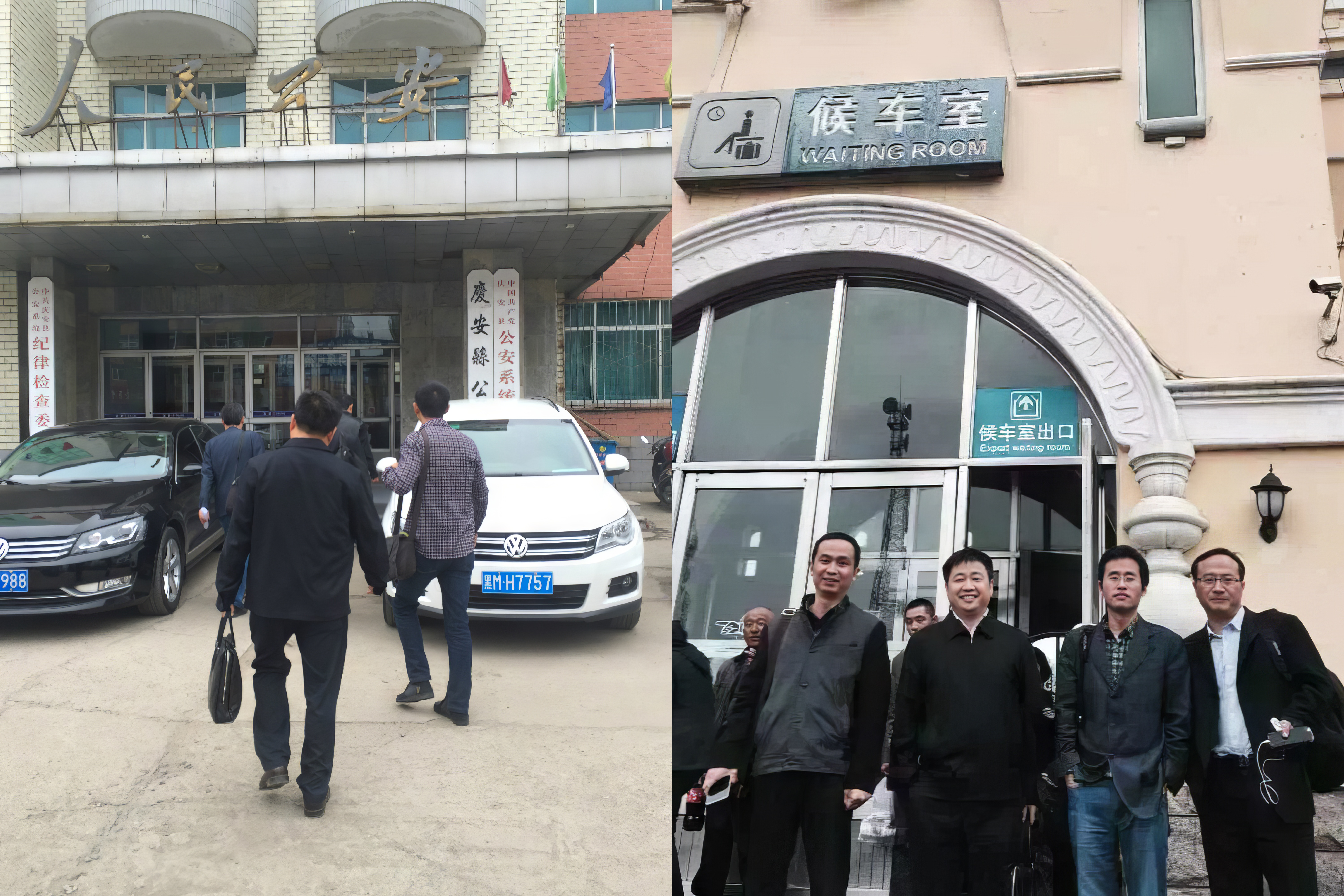
On May 13, 2015, in the early spring chill of northeast China, four lawyers—Xie Yanyi, Li Zhongwei, Xie Yang, and Liu Shuqing—said their farewells one by one in front of the Heilongjiang Provincial Public Security Department, agreeing to return to Qian’an before long.
Just eleven days earlier, in the waiting hall of the Qian’an railway station in Heilongjiang, farmer Xu Chunhe had gotten into an argument with police officer Li Lebin. Li fired a shot from close range into Xu’s heart, killing him on the spot in front of his 81-year-old mother, Quan Yushun, and his three children, all under the age of ten.
Had the police committed an act of wanton killing? The truth was unclear, but by the following day, Dong Guosheng, the then deputy magistrate of Qian’an County, had already visited the police station on behalf of the government to show support for the police. Once this news spread online, it struck a nerve with countless individuals online. Suddenly, the small town of Qian’an, located in Suihua, Heilongjiang, became the focus of national public attention.
From May to June, waves of human rights lawyers such as Xie Yanyi, along with civically engaged citizens, traveled across China to Qian’an, paying their own way to investigate the truth. Amid their tense and exhausting work, several lawyers took time to visit Xu Chunhe’s three children in a welfare home. Seeing the innocence of these young ones, they couldn’t help but be brought to tears.
“At that time, I made an agreement with everyone to go back again, because I simply couldn’t let go of those three children who were like orphans—their father already dead, their mother confined in a psychiatric hospital,” Xie Yanyi recalled a decade later, unable to conceal his sorrow.
Fate is unpredictable: what seemed like an ordinary parting turned out to be a final farewell. On May 17, Wu Gan (online name “Butcher”), who had offered a 100,000 yuan reward that secured eyewitness video of the Qian’an incident exposing the truth, departed for Jiangxi to support the lawyers protesting outside the court in the “Leping Death Penalty Case”2 by staging a sit-in and relentlessly challenging procedural abuses. But the very next day, he was arrested in front of the Jiangxi Provincial High Court.
At the time, no one foresaw that a vast net had already been cast over the lawyers and “citizen observers.” As lawyer Li Fangping later recalled, in early June he and lawyer Wang Yu went to the detention center to meet with Wu Gan. Wu was wearing a T-shirt emblazoned with “V for Vendetta” (a symbol of resistance). Though in handcuffs, he kept smiling, and no one felt like anything serious would happen.
Beginning on July 9, 2015, the authorities launched a nationwide operation targeting more than 300 lawyers and citizens, subjecting them to arrests, home raids, interrogations, or invitations to “drink tea” (喝茶; informal police summons). The campaign lasted for months and came to be known as the “709 Crackdown.” Beijing Fengrui Law Firm suffered the worst impact: on July 9, lawyer Wang Yu was the first lawyer to be detained; soon after, the firm’s director, Zhou Shifeng, assistant Liu Sixin, and several other lawyers and staff members were also taken into custody.
Of the dozens of lawyers and citizens — including Xie Yanyi and Xie Yang — who had gone to Qian’an or actively voiced support from afar, hardly any escaped unscathed.
Over the following decade, as the authorities maintained unrelenting pressure, China’s civil society suffered devastating blows, and the lawyers never again returned to Qian’an.
In 2016, Quan Yushun, who had once entrusted human rights lawyers to “seek justice” for her son’s death by suing the police and local government, was tragically struck and killed by a car while crossing the street. Xie Yanyi, Xie Yang, and the other lawyers were all in prison at the time and were unaware of this incident. During his 553 days in detention, Xie Yanyi also missed not only the birth of his youngest daughter, but also his mother’s funeral.
May 2, 2025 marked the tenth anniversary of Xu Chunhe’s death. On that day, Liu Shuqing, whose human rights defense work had cost him his part-time lawyer’s license and, with it, his teaching post, forcing him to transfer to a lab administrator job, sat at home in Shandong and wrote an essay titled, “Reconstructing the Truth of the Qian’an Case and Recording the Lawyers’ Advocacy.” Its very first line read: “Who still remembers the humble victim, Xu Chunhe?” Liu said that each year on this day, his heart weighs heavy with unease. The essay was, in his words, a meager act of commemoration, both for Xu Chunhe himself and for that era when lawyers and citizens, hemmed in on all sides, nonetheless struggled and pressed forward together in defense of human rights.
Looking back today, the period from the late 1990s to around 2015 was an era of explosive growth in civic consciousness and rights-defense movements. It was also a time when human rights lawyers, born from China’s civil society, challenged the existing legal system through individual cases, sought a path toward rule of law and freedom, and ultimately faced suppression. This trajectory of China’s civil society, from its fragile emergence from its cocoon to its premature demise, spanned just over two decades.
1
“Ten years on, remain an upright and honest person.”
At 8 o’clock in the evening on July 9, 2025, during the “China Human Rights Lawyers’ Day” event held at the Komaba Campus of the University of Tokyo, the organizers announced that lawyers Lu Siwei and Li Guobei had been awarded this year’s China Human Rights Lawyers Award.
The award was established overseas on July 9, 2017, with the aim of showing solidarity and supporting Chinese human rights lawyers persevering under harsh circumstances. In recent years, many recipients—including Gao Zhisheng, Xu Zhiyong, Ding Jiaxi, and Yu Wensheng—have themselves been imprisoned.
Lu Siwei, together with lawyers Liang Xiaojun, Ren Quanniu, and Lin Qilei, once represented the case of the 12 Hong Kongers,3 as well as other human rights cases, and was subsequently subjected to long-term border restrictions. In September 2023, while planning to travel from Laos to Thailand and ultimately reunite with his family in the United States, Lu was detained by Laos police and forcibly returned to China. After nearly a year under “release on bail pending trial,” he was sentenced to 11 months’ imprisonment on the charge of “illegally crossing the border,” and was only released on August 5, 2025.
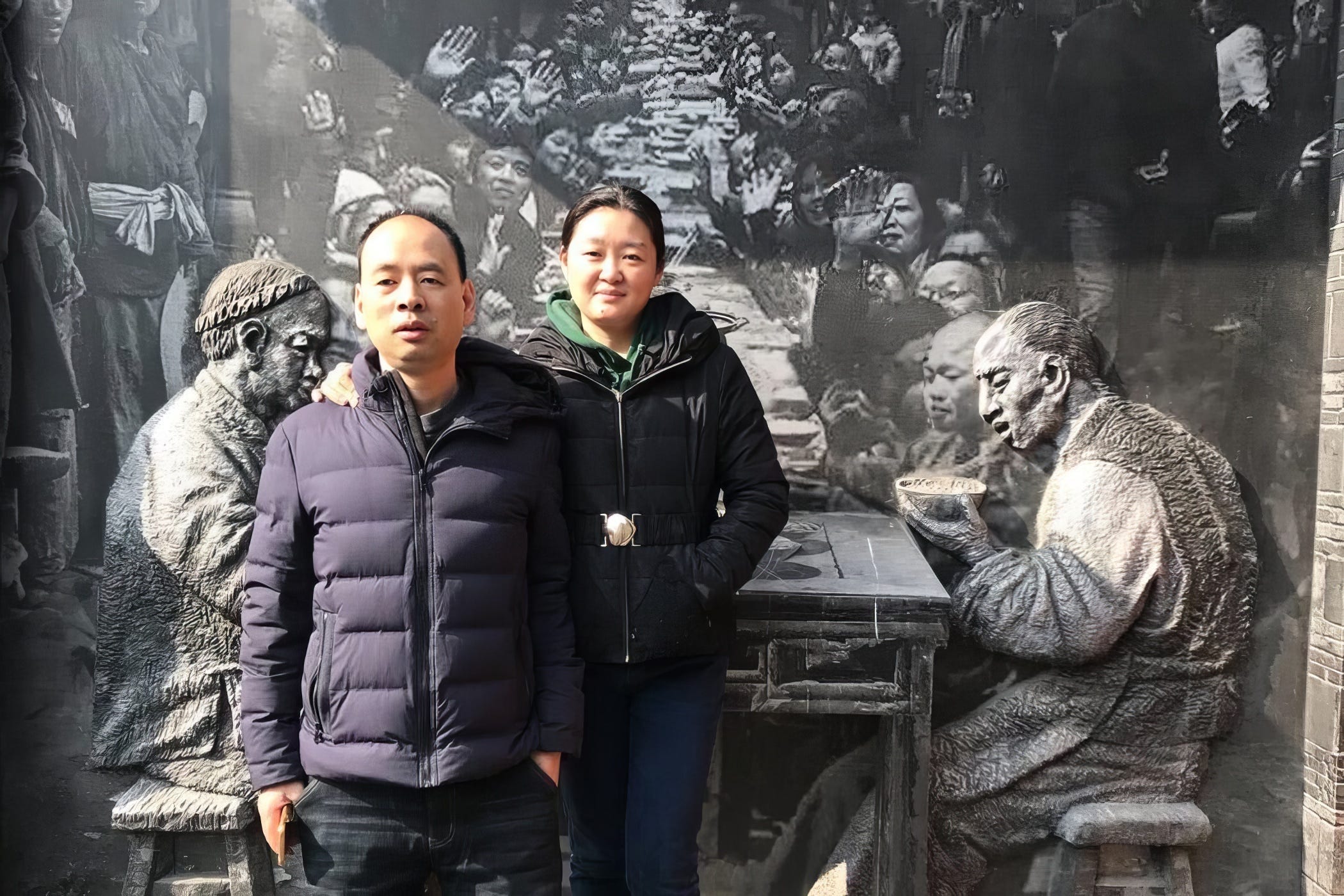
Now living temporarily in California, Zhang Chunxiao immediately shared the news of her husband Lu Siwei’s award with their 16-year-old daughter. Since leaving China on January 2, 2022, mother and daughter have been separated from Lu Siwei. In August 2023, at the critical moment when Lu was arrested by Lao police and on the verge of being sent back to China, Zhang, who had never before stepped into the public arena, issued an urgent appeal to the international community to stop his repatriation. On her most desperate day, she stood in a hurricane-ravaged park in Southern California, clutching an umbrella amid the driving wind and rain and praying to the heavens for her husband’s rescue. The sorrow and fear of that moment remain vivid to this day.
The other award recipient, Li Guobei, as the commendation noted, had rarely stood in the spotlight. But in fact, ever since the 2014 “Jiansanjiang” case in Heilongjiang,4 she has consistently paid close attention to human rights cases. In recent years, while practicing law in Beijing, she has taken on cases including the “Terminus 2049” case,5 the Li Qiaochu case, and the Xie Yang case, time and again stepping forward in defiance of danger.
On July 30, 2025, the trial of Xie Yang, accused of “inciting subversion of state power,” opened in Changsha, Hunan. During the “709 Crackdown,” Xie had been tortured and imprisoned for more than two years. In January 2022, he was detained again after traveling to Hunan to support Li Tiantian, a schoolteacher subjected to forcible psychiatric confinement.6 Before this most recent hearing, his detention had been extended more than ten times. Acting as his defense lawyer, Li Guobei overcame numerous challenges both inside and outside the courtroom to disclose information to the public and mount a vigorous defense on Xie Yang’s behalf.
“I don’t think anyone would deny the limits of an individual when confronted with a powerful current. And yet, over the past four years, Lawyer Li made me feel that there truly are people who, when a speck of ash struck my life at the speed of a comet, can through an almost miraculous act of perseverance keep the small patch of sky above my head from shattering,” wrote Li Qiaochu, fiancée of political prisoner Xu Zhiyong, on social media on July 11. After Xu’s re-arrest in 2020, Li herself was charged the following year with “inciting subversion of state power” and later sentenced to three years and eight months in prison, before being released in August 2024.
Li Qiaochu said that lawyer Li Guobei is her personal “goddess” — a steadfast and wise figure whose presence is often seen in the defense of various “sensitive” cases. Among these is the case of Chen Pinlin,7 charged with “picking quarrels and provoking trouble.” Chen was sentenced for filming Urumqi Middle Road (also known as Not the Foreign Force), which documented the White Paper protests in Shanghai in 2022. Li Guobei was one of his defense lawyers.
On July 9, 2025, human rights organizations around the world issued statements commemorating and speaking out about the tenth anniversary of the “709 Crackdown.” But in China, because of severe online censorship, few beyond the lawyers and “citizen observers” who had experienced it firsthand, and their families, were even aware of the day.
On that day, in a residential compound in Beijing’s Changping District, 49-year-old lawyer Wang Quanzhang was, as usual, under tight surveillance. Plainclothes agents were stationed throughout the corridors inside and outside his building. By his count, at least thirty to forty people rotated shifts to watch him daily. He said that of the ten years since the 709 Crackdown, the first five were spent in detention, while the five years since his release in April 2020 have felt like living inside an even larger prison.
In Beijing, he and his wife Li Wenzu were forcibly evicted thirteen times in just two months, and their child was repeatedly denied schooling since starting kindergarten. The family wandered from place to place seeking an education, but even after finding a school in Guangdong, the child was again forced out under government pressure.
That same day marked one year since the release of 41-year-old lawyer Chang Weiping. During the height of China’s strict pandemic controls, he was sentenced to three and a half years in prison for “subversion of state power,” while his wife and child were left stranded overseas. Now, barred from practicing law, he must find another way to make a living.
In Beijing, human rights lawyer Tang Jitian tries to keep himself busy, yet memories of his daughter Tang Zhengqi’s face and laughter still surface unbidden. In February 2024, Tang Zhengqi died of serious illness in Japan (see WOMEN’s earlier report: “Tang Zhengqi: More Than the Daughter of a Human Rights Lawyer”). While she was alive, Tang fought desperately for permission to leave China to see her, but the authorities refused. He himself was also “disappeared” for more than a year, and in the end never saw his daughter one last time. For his role in promoting the 2008 direct election of the Beijing Lawyers’ Association and in defending Falun Gong human rights cases, his law license had already been revoked in 2010. This July, for the sake of earning a livelihood, he and friends tried to establish a company, but were blocked at the stage of business registration. Outraged, he argued his case, vowing to fight for his most basic right to survive.
Meanwhile, Xu Yan—only half a year out of prison—set off with her son on the journey from Beijing to Zhenjiang, Jiangsu. July 28 was visiting day, and she was on her way to Zhenjiang Prison to see her husband, Yu Wensheng. In April 2023, both she and Yu had been arrested together in Beijing, leaving their underage son alone at home, an experience that inflicted deep psychological trauma on him.
In Tianjin, Wang Yu’s husband Bao Longjun received a warning call from the guobao, the national security police, because their son, Bao Zhuoxuan, had taken part in an overseas event commemorating the 709 Crackdown on July 9.
On the night of July 9, 2015, 15-year-old Bao Zhuoxuan was preparing to leave China to go and study abroad when police tackled him and his father to the ground as he boarded his flight at Beijing Capital Airport. That moment was the beginning of a nightmare that lasted until 2018, when Bao Zhuoxuan finally managed to go overseas to study. Because Wang Yu and her husband have remained under exit bans, they have not seen their son for seven years.
In Fujian, Wu Gan—after serving a full eight-year sentence for “inciting subversion of state power”—had already been released on May 18, 2023. In Hunan, another citizen activist, Ou Biaofeng, who had been an active “observer” during those years, was released from prison in September 2024. Though he was not detained during the 709 Crackdown itself, in 2022 he was sentenced to three and a half years; as he later disclosed, one of the “charges” against him was his vocal support for and writings commemorating “709.”
In August 2024, citizen activist Wang Mo from Huaian, Jiangsu, regained his freedom. After 2010, he had actively participated in observing numerous major cases. In 2016, he was sentenced to four years and six months for “inciting subversion of state power,” and after his release was repeatedly detained or sentenced again for his speech.
Meanwhile, in Guangxi, rights defender Li Yanjun sadly passed away due to illness on June 4th of this year. During his life, he had participated in rights protection protests and was active at various citizen observer demonstrations, for which he endured severe repression and torture.
It is understood that around July 9, 2015, in addition to the lawyers, large numbers of citizens across the country who had participated in the rights-defense movement and in collectively observing high-profile cases alongside the human rights lawyers were also arrested, sentenced, or otherwise repressed, leaving some in dire circumstances. For example, after the Qian’an incident came the “Weifang Crackdown,” and in September 2016 the “Suzhou Crackdown,” both of which saw widespread arrests of citizen observers. Yet, lacking visibility, they have rarely drawn media attention, and under heavy pressure, few dare to speak out. As a result, the full scale of their plight, and even the numbers affected, remain unknown to the outside world.
“The 709 Crackdown was a sweeping purge of human rights defenders; it was not only aimed at lawyers,” recalled one human rights lawyer who asked not to be named.
After a decade of vicissitudes, many of the once-active human rights lawyers have been forced into exile, among them Chen Taihe, Chen Jiangang, Wu Lei (real name Li Jinxing), Fang Xiangui, and You Feizhu.
Many of the civic activists who were once prominent in civil society have also fallen silent. On November 8, 2024, lawyer Xia Lin was released from prison. Back in 2014, when Guo Yushan, founder of the independent think tank Transition Institute, was detained, Xia had worked vigorously to secure his release—only to be arrested himself that November. In 2016, without having given a confession, he was sentenced to ten years. He served every day of those ten years, and by the time he stepped out of prison, the world beyond had changed so profoundly since 2014 that it felt to him like another lifetime.
Earlier, in 2017, lawyer Gao Zhisheng disappeared again. A pioneer among China’s human rights lawyers, he has remained missing for eight years with no news of his fate. His wife, Geng He, fled to the United States with their children and tirelessly campaigned for her husband’s release, but to no avail, filling her with grief and disappointment.
Xu Zhiyong, who in the early 2000s threw himself into the rights-defense movement and became a leading advocate of the New Citizens’ Movement, was given a heavy sentence in April 2023, together with lawyer Ding Jiaxi: fourteen years for Xu, twelve for Ding.
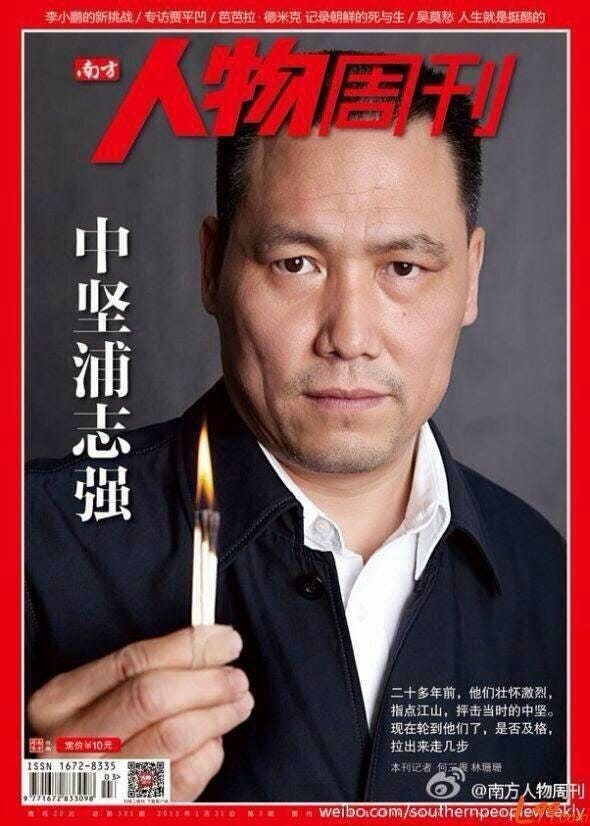
These have been years of hardship, but not only for human rights lawyers. Since 2013, China’s civil society has been under comprehensive assault, encompassing the media, NGOs, religion, universities, and research institutes—all groups the authorities had already targeted in 2012 as the “new five black categories” (xin hei wulei), as declared in a July 31, 2012 article in the People’s Daily overseas edition. At the head of that list were “rights-defense lawyers.” In 2014, lawyer Pu Zhiqiang, who had handled a number of major cases, was detained under the pretext of attending a June Fourth commemoration, and the following year was sentenced in what officials called a final “settling of accounts.”
In fact, the all-out assault on China’s civil society had already begun before the “709 Crackdown.” In early 2013, soon after the Southern Weekly New Year’s editorial incident,8 Document No. 9, or the Communiqué on the Current State of the Ideological Sphere, a document from the General Office of the Chinese Communist Party targeting civil society and known as the “Seven Do Nots,” circulated online. Universal values, civil society, civil rights, judicial independence…terms once common in China’s public discourse suddenly became taboo. Soon after came the so-called “Sixteen Points,” or the Several Opinions on Strengthening and Improving the Ideological and Political Work of Young University Teachers, underscoring even more clearly the authorities’ intent to impose strict control over speech and thought.
“The days of the rights-defense world are long gone. Today, each of us is only a shadow of what we once were,” said lawyer Chang Weiping. Not long ago, he happened to run into lawyer Wang Cheng. In 2014, during the “Jiansanjiang Incident” in Heilongjiang, Wang had three ribs broken while pursuing a rights-defense case. His convictions have not changed, but he has chosen to step back from the struggle, devoting himself to a quiet life with his family. While wishing him well, Chang admitted his feelings were bittersweet.
“Since 2015, it feels as though everything has been put on pause,” said Wu Lei, who now lives in Japan, in a recent interview with the JF Books podcast. After leaving China in March 2023, he has scarcely had a moment’s rest. He founded the “Tokyo Humanities Forum,” which brings together Chinese communities in exile. This July, he connected online with several fellow lawyers to look back on the 709 Crackdown.
In the face of despair, some have chosen to “lie flat,” while others continue to hold their ground on the front lines. “Ten years on, I continue to be an upright and honest person,” lawyer Zhang Lei wrote on July 9, 2025, on X, formerly Twitter. For years, he has quietly persisted, giving himself the name “Lawyer Bluestone” as a pledge to endure. In the decade since the 709 Crackdown, Zhang and his peers have struggled forward, watching over the rule of law’s weak flame both inside and outside the courtroom.
2
Those Twenty Years: “Lawyers Born in the Right Place and Right Time” on the Stage of Civil Society
In 1997, Li Heping, a law graduate from Zhengzhou University who had grown up in rural Xinyang, Henan, officially became a lawyer. Three years later, at the age of 27, he moved from Zhengzhou to Beijing to practice, and also found love: he was reunited there with his university classmate Wang Qiaoling, and the two later married.
Li’s path as a lawyer seemed to have arrived at just the right moment. On May 15, 1996, the Standing Committee of the National People’s Congress had passed the Lawyers Law of the People’s Republic of China; that same October, the Ministry of Justice issued the Measures on the Administration of Partnership Law Firms. What people commonly call “private law firms” began to emerge in China from that year onward.
When the Chinese Communist Party came to power in 1949, it completely repudiated the legal system of the Republic of China and dismantled the Nationalist-era legal profession. Although the new regime proclaimed the creation of a “people’s lawyer system,” in practice, constant political campaigns—especially the Anti-Rightist Campaign of 1957 and the decade-long Cultural Revolution—left the judicial system hollow, with no lawyers in any real sense.
Following the “reform and opening up” of 1978, China gradually rebuilt its legal profession and issued a series of relevant laws. Yet as late as the early 1990s, lawyers were still classified as state administrative cadres. It was only in 1996, the year after Li Heping graduated from university, that private law firms began to proliferate, especially in major cities like Beijing and Shanghai.
In 1995, ChinaNet, the country’s public computer network, officially opened to the public, marking the beginning of the internet’s popularization in China. The rise of the internet provided both the tools and the soil for the incubation and growth of civil society.
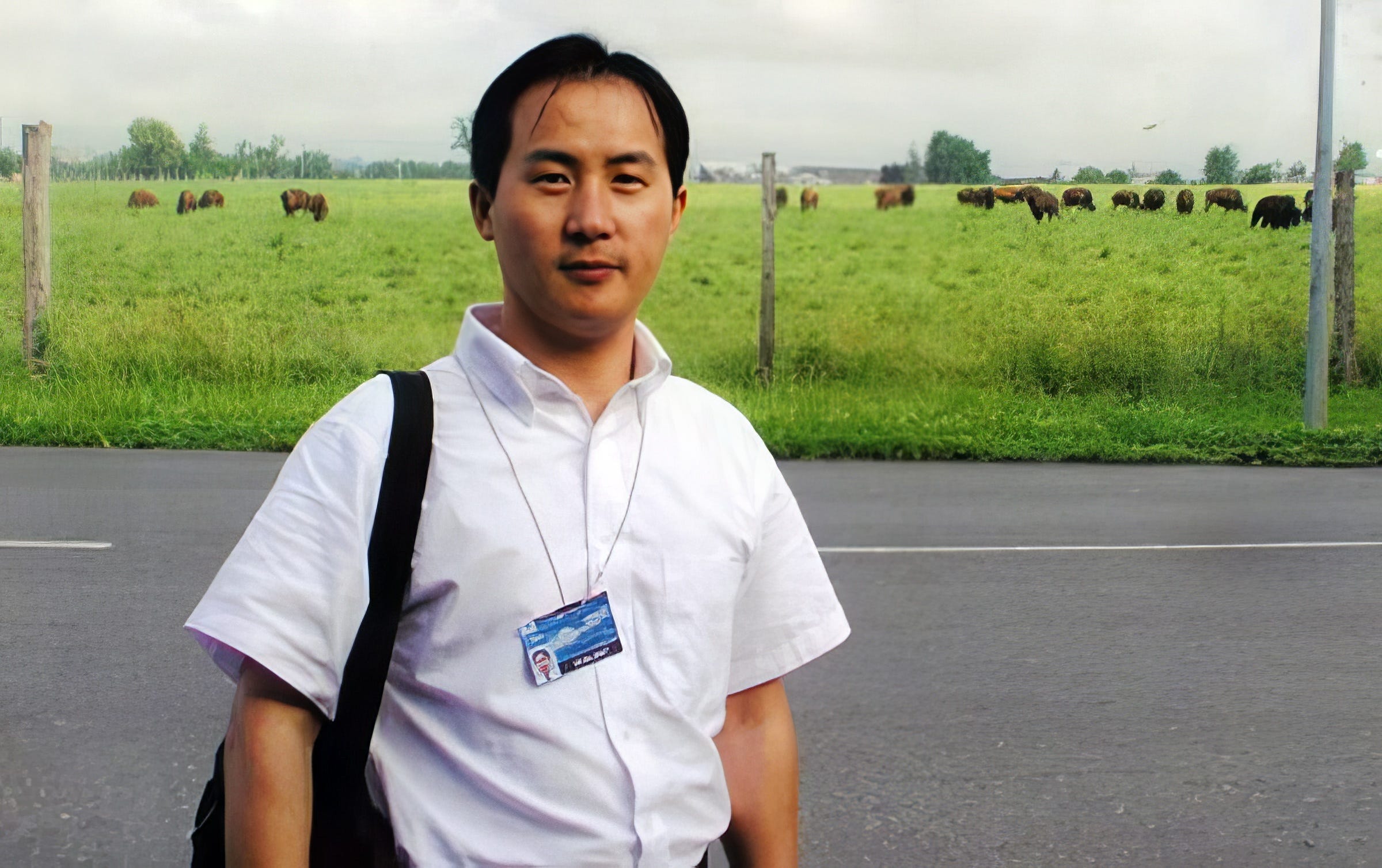
Like many lawyers of his generation, Li Heping could have focused on commercial cases and lived a comfortable life. Instead, he deliberately chose the field of human rights cases. In 2001, when the “New Youth Society Four Gentlemen” case erupted in Beijing,9 Li Heping became the defense lawyer for one of the four, Yang Zili. At the time, Yang had only recently graduated with a master’s degree from Peking University. Together with Xu Wei and several other socially minded young men, Yang had founded the New Youth Society. Following a denunciation by an informant, they were arrested and prosecuted on charges of “subverting state power,” and Yang was ultimately sentenced to eight years in prison.
In 2003, college student Sun Zhigang was beaten to death in a custody and repatriation center10 in Guangzhou. The case, first reported by the Southern Metropolis Daily, shocked the entire country. In response, three Peking University law doctorates—Xu Zhiyong, Teng Biao,11 and Yu Jiang—submitted a petition to the Standing Committee of the National People’s Congress, calling for a constitutional review of the Measures for the Custody and Repatriation of Urban Vagrants and Beggars. At the same time, five well-known legal scholars, including He Weifang, issued an open letter in support. Countless members of the legal profession were profoundly affected by the incident. That year came to be called by many the “first year of civil rights defense” in China. The year before, widespread media coverage of the “Yan’an couple watching pornography at home” case12 had already sparked a national debate over the boundaries between state power and private rights.
It was also in 2003 that the case of Huang Jing, an elementary school teacher in Hunan, drew enormous attention online. Huang was suspected of having died from date rape, but five separate forensic examinations yielded five conflicting results. Determined to uncover the truth about her daughter’s death, Huang’s mother pursued justice relentlessly. Professor Ai Xiaoming of Sun Yat-sen University and independent filmmaker Hu Jie produced the documentary Garden in Heaven, which recorded the case in full. The Huang Jing case is regarded as the first to bring gender-based violence starkly before the public, leaving a profound impact on the fight against such violence, on the protection of women’s rights, and on reforms to forensic procedures.
For Chinese citizens, the rise of the internet brought with it an unexpected awakening of civic consciousness. In 2003 and the years that followed, “rights defense” became a buzzword. Petitioners, lawyers, journalists, and public intellectuals, together with investigative reports and opinion pages in the market-oriented media, as well as online forums and blogs, created a noisy and vibrant public sphere. Speaking out as citizens became part of daily life, and those engaged in public affairs believed that they could each contribute something to the change they were waiting for.
In 2006, through the efforts of Guo Yushan, founder of the independent Beijing think tank Transition Institute, Wang Zhenyu and others established the Beijing Impact Law Firm (hereafter “Impact”), under the auspices of the Constitutional and Human Rights Committee of the All China Lawyers Association. The firm primarily handled cases of legal aid for citizens. Xia Lin served as Impact’s first director. The name “Impact” (rendered in Chinese as Yipai, by transliteration) signified their aspiration to influence the legal system through individual cases.
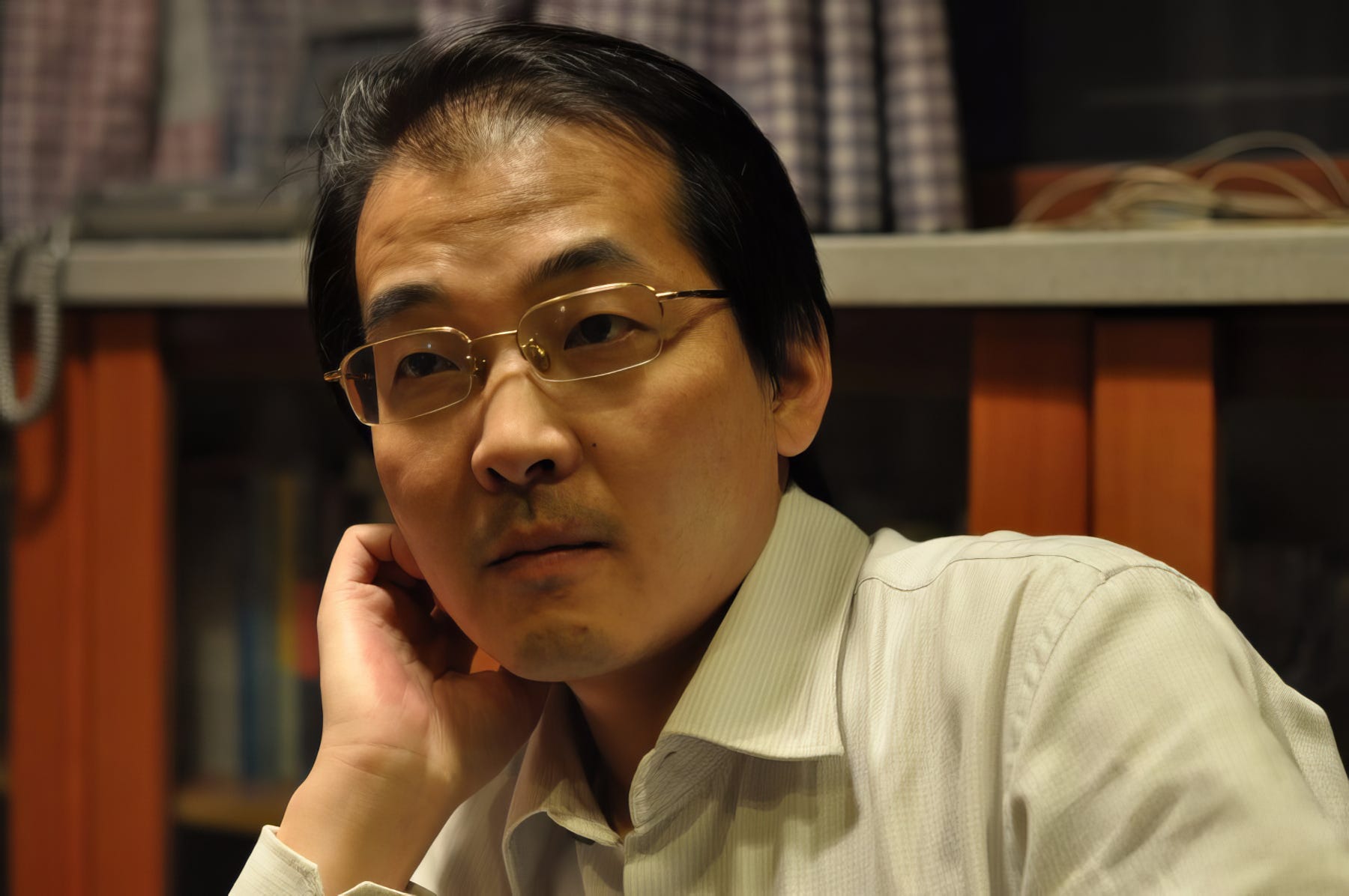
Xia Lin graduated in 1992 from Southwest University of Political Science and Law. After the gunfire of June Fourth, he swore: “Never in this life will I serve as the lackey of power” (see Initium Media’s 2016 report, “Lawyer Xia Lin and His Era”). In 2001, he moved from Guizhou to Beijing, where he met Guo Yushan and became his close friend. He went on to practice law in Beijing, representing major cases including those of Deng Yujiao, Cui Yingjie, Tan Zuoren, and Ai Weiwei’s tax case. Though he styled himself publicly as a “technical expert,” avoiding the label of “human rights lawyer,” Xia actively defended Guo Yushan after Guo was imprisoned and ultimately arrested in 2014.
Li Heping began practicing law in Beijing earlier than many of his peers and gradually found himself drawn into one of China’s judicial forbidden zones: Falun Gong cases. Influenced by lawyer Gao Zhisheng’s ideas, Li was not content to focus merely on statutes and courtroom strategy for a “technical” defense. Instead, he strove to mount not-guilty defenses from the perspective of constitutional principles and freedom of belief on behalf of Falun Gong defendants.
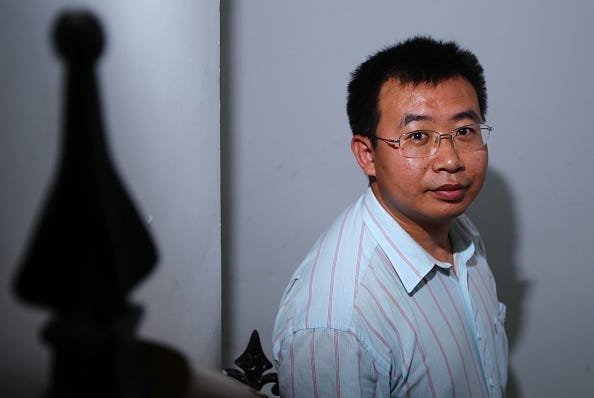
Jiang Tianyong was Li Heping’s high school classmate. After graduating in 1995 from Changsha Hydroelectric Normal College, he was assigned to teach Chinese at a middle school in Zhengzhou. In 2001, he obtained his lawyer’s license, and three years later moved to Beijing to practice. The two former classmates both went on to become renowned human rights lawyers, and both ended up behind bars for their “faith in the law.” Li Heping was detained in the 709 Crackdown; Jiang Tianyong, after working actively to rescue colleagues in its aftermath, disappeared in November 2016 when he tried to visit lawyer Xie Yang at a detention center in Changsha. He was later sentenced to two years in prison for “inciting subversion of state power.”
In 2005, both Li Heping and Jiang Tianyong were deeply involved in the case of blind lawyer Chen Guangcheng in Shandong13 which shocked the world. They also worked on the Gao Zhisheng case,14 the Shaanbei oilfield case,15 the Taishi Village case in Guangzhou,16 and the Hu Jia case,17 as well as representing many Falun Gong defendants. In July 2009, Jiang Tianyong’s law license was revoked by the Beijing Municipal Bureau of Justice.
Jiang Tianyong’s Twitter bio still reads: “A lawyer born for his times; a lawyer who wants to take on any case; a lawyer hated to the bone by a small handful; a lawyer striving to earn the people’s recognition; a lawyer who keeps working even without a license.” In the address field he wrote: “From out of town! From Henan! And I insist on practicing in Beijing!”
His profile, in both tone and style, recalls the almost “wild growth” of China’s civil society around 2005.
At that time in China, the phrase “respect and protect human rights” had just been written into the Constitution, and “judicial reform” appeared frequently in official discourse. The “rights-defense movement,” in which lawyers joined hands with petitioners and engaged citizens, was only just beginning. In a country without an independent judiciary, lawyers—by the nature of their work—were often able to reach the darkest corners of society. Young lawyers born in the 1970s, such as Li Heping, Jiang Tianyong, and Li Fangping, carried ideals of the rule of law and possessed a strong drive for action. In the open and dynamic atmosphere of Beijing at the time, they thrived. “Attention is power, onlookers can change China,” the title of an article by Southern Weekly commentator Xiao Shu, captured the mood of the era. In 2005, Yazhou Zhoukan (Asia Weekly), a Hong Kong magazine, named “China’s rights-defense lawyers” as its Persons of the Year.
For many human rights lawyers and civil society practitioners, 2005 was also a pivotal year.
That year, Tang Jitian submitted his resignation to the Yanbian Prefecture Procuratorate in Jilin. Once approved, he left his post as a prosecutor to become a lawyer. He could not have foreseen that this decision would set him on a road of no return: the rugged and unending path of a human rights lawyer, where torture and surveillance would become his constant companions, his body and spirit battered, and his family dragged into suffering alongside him.
That same year, villagers in Taishi Village, Panyu District, Guangzhou, dissatisfied with local officials’ land sales, launched a recall campaign and confronted the authorities in defense of their rights. Activist Guo Feixiong, who lived in Guangdong, went to the village together with Tang Jingling and lawyer Guo Yan to assist the villagers. Professor Ai Xiaoming of Sun Yat-sen University persisted in filming despite the risk of physical assault, leaving behind the invaluable documentary Taishi Village.
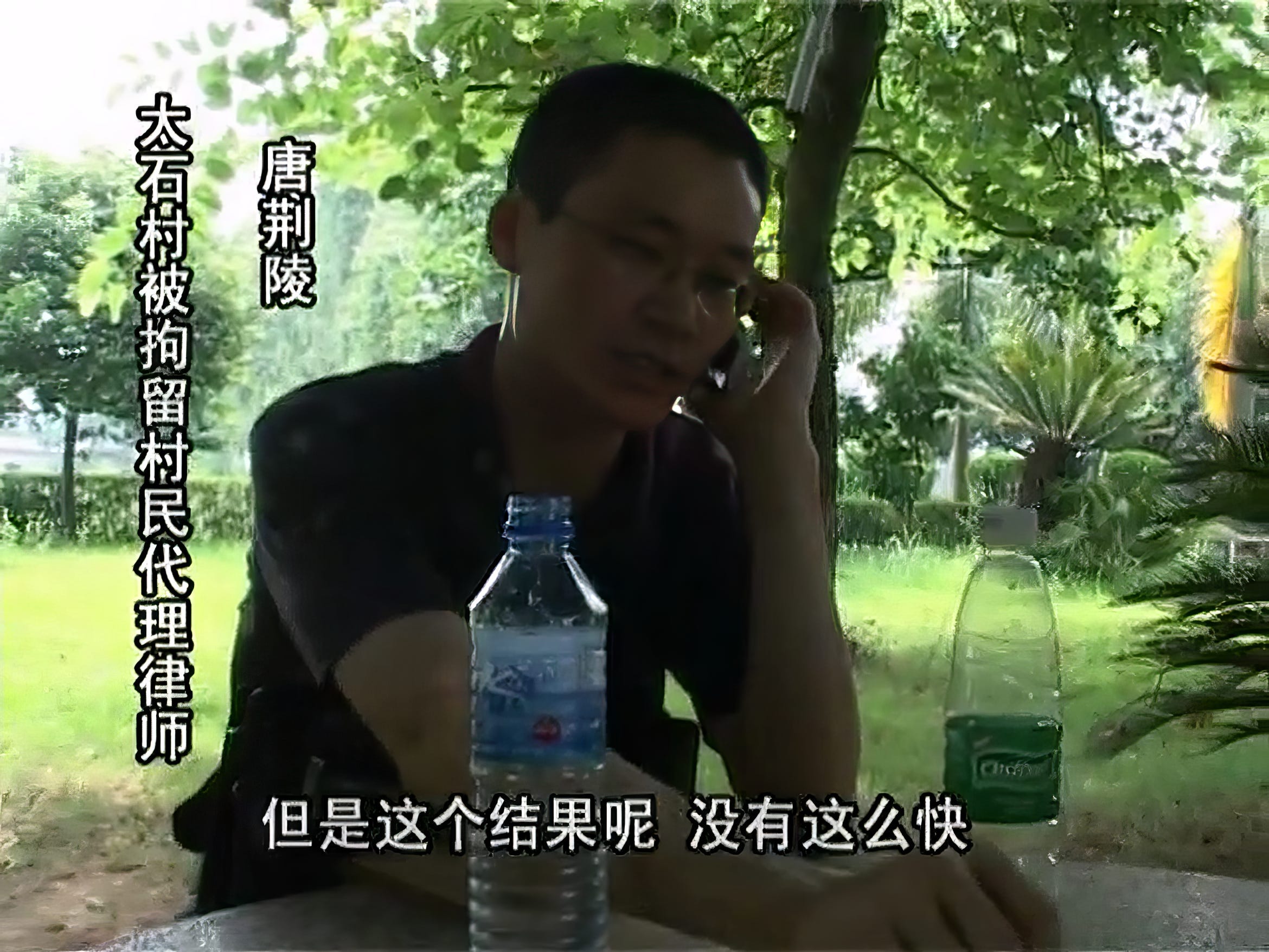
As Teng Biao later recalled, the “Taishi Village Legal Advisory Group” at the time included not only those already mentioned but also Gao Zhisheng, Li Heping, Xu Zhiyong, Zhang Zuhua, Wang Yi, and Pu Zhiqiang—an exceptionally strong lineup. On September 12, 2005, Taishi Village was surrounded by over a thousand police officers; dozens of villagers, along with Guo Feixiong and other rights defenders, were taken away. In 2006, Tang Jingling’s law license was revoked, but he went on to organize the “Non-Violent Civil Disobedience Movement” and the “June Fourth Meditation Day” before he ultimately lost his freedom in May 2014. Tang was then sentenced to five years in prison.
The first decade of the 21st century was a period of rapid urbanization in China, marked by widespread forced displacement and erupting social tensions. Collective protests broke out frequently, investigative journalists rushed from one incident to the next, and the “rights-defense movement” gathered momentum. Against this backdrop, a large cohort of lawyers, grounded in concern for society’s most vulnerable and committed to the ideal of the rule of law, stepped onto the stage of history. They focused on citizens’ rights-defense, fought relentlessly using legal procedures, and ventured into the forbidden territory of political and faith-related cases. Gradually, a fledgling community of Chinese human rights lawyers took shape, drawing more and more newcomers into their ranks.
3
Builders of Civil Society: From “Lightfoot Maneuvers” to Walking the Straight Path
While some human rights lawyers were taking on sensitive cases and trying to push the boundaries of “forbidden zones,” another part of China’s civil society was also taking shape — NGOs, media, and lawyers often worked hand in hand to cultivate civic participation in less “sensitive” areas.
In 2006, Liu Shuqing passed the bar exam. Around that time, he connected online with NGO worker Lu Jun. He recalls that this was still the online forum era, before Weibo or WeChat existed. On an online forum dedicated to fighting hepatitis B discrimination, called Gandan Xiangzhao,18 he met the moderator, Lu Jun, whose screen name was Jinge Tiema (“Iron Horse with Sword and Spear”). Liu says that even today he still calls Lu “Brother Iron Horse,” because that name carries the memory of a journey they shared.
Lu Jun, born in 1970, got his start on the Gandan Xiangzhao forum and went on to establish the Beijing Yirenping Center in December 2006. The center quickly became a leading force in China’s anti-discrimination field, and Lu himself emerged as a prominent grassroots advocate for equality. At the time, Yirenping worked closely with “rights-defense lawyers,” promoting and advancing a large number of public-interest lawsuits.
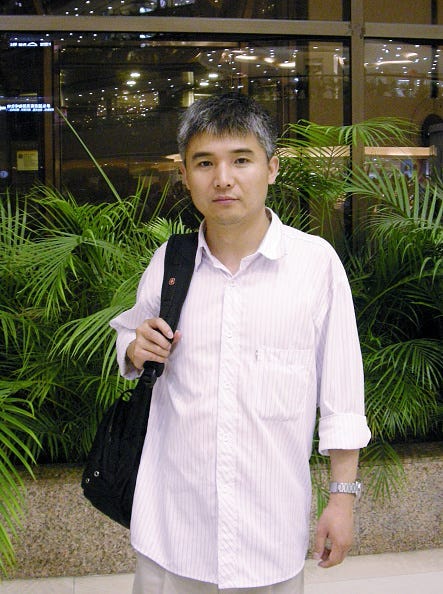
Liu Shuqing is a hepatitis B carrier. He recalls that when he graduated from university in 1999, hepatitis B discrimination in China was at its peak—a time when society “reacted to it as if to a tiger.” He said, “You cannot imagine how severe the discrimination was then; it crushed people’s spirits.” When he finished his master’s degree and sought employment, he encountered hepatitis B discrimination and only by luck managed to find a job. To this day, he remembers the fear, anxiety, and humiliation he felt at the time.
On April 3, 2003, Zhejiang University student Zhou Yichao, identified as a hepatitis B carrier during the medical examination for the Jiaxing civil service recruitment process, was eliminated from the competition. Enraged, he stabbed two local personnel officials, killing one and seriously injuring the other. On September 4 that year, Zhou was sentenced to death at his first trial.
It was against this backdrop that the Gandan Xiangzhao rights forum was launched in April of that year, soon attracting large numbers of hepatitis B carriers who exchanged experiences and ideas. Lu Jun has called it China’s first grassroots NGO against hepatitis B discrimination. Liu Shuqing recalls that on the site, members called each other “comrades-in-arms.” The term referred to their fight not only against the illness itself, but also against discrimination.
In 2005, Liu began writing articles against hepatitis B discrimination, initially under the pen name “Cowardly Mouse.” After converting to Christianity, he adopted the pen name “Noah.” He remembers writing one article in particular, titled “Countering Hepatitis B Discrimination: From Walking Lightly Over Waves19 to Walking the Straight Path.” He explained, “‘Walking lightly over waves’ is an erratic move, it requires one to be indirect. It was only later on that I took a straightforward approach. That was when I began consciously writing from a constitutional perspective.” He also recalled that Lu Jun greatly admired one of his articles on “opposing hepatitis B discrimination in relation to constitutionalism,” even using it as the forum’s New Year’s message that year. It was through that article that the two came to know one another.
Yirenping’s support extended not only to hepatitis B carriers but also to people living with HIV, persons with disabilities, women, LGBTQ individuals, patients with depression, and those forcibly subjected to psychiatric confinement. In those years, they also actively engaged in legislative advocacy, submitting numerous proposals from a grassroots perspective.
Around 2007, Liu Shuqing finally met Lu Jun in person. By then, Liu had already obtained his lawyer’s license, and soon afterward assisted Jiang Tianyong in handling a hepatitis B discrimination case. The client was a young woman who had graduated from a prestigious university and applied to become a reporter at Shandong Dazhong Daily, only to be rejected after facing hepatitis B discrimination. On that occasion, Liu witnessed Jiang Tianyong’s style of defense and felt deeply inspired: “It was really uplifting—this is how a lawyer ought to be.”
From his early work on anti-discrimination cases to his growth into a human rights lawyer, Liu Shuqing feels that he was guided and inspired by a community of fellow lawyers. In 2013, the “Shandong Human Rights Lawyers Society” met in Jinan. At this gathering, organized by lawyers Liu Weiguo, Fu Yonggang, and others, human rights lawyers from across the province and beyond converged in one place. Deeply moved, Liu thereafter became increasingly active in human rights cases.
He gradually came to realize that being a lawyer in China carried an additional responsibility: not only to represent cases, but also to articulate a set of ideals — especially in cases involving prisoners of conscience. “Their sacrifices ought to be met with moral recognition and social solidarity. People must know that he or she is not alone.” This conviction shaped the course of his own life—from then on, he walked the straightforward path.
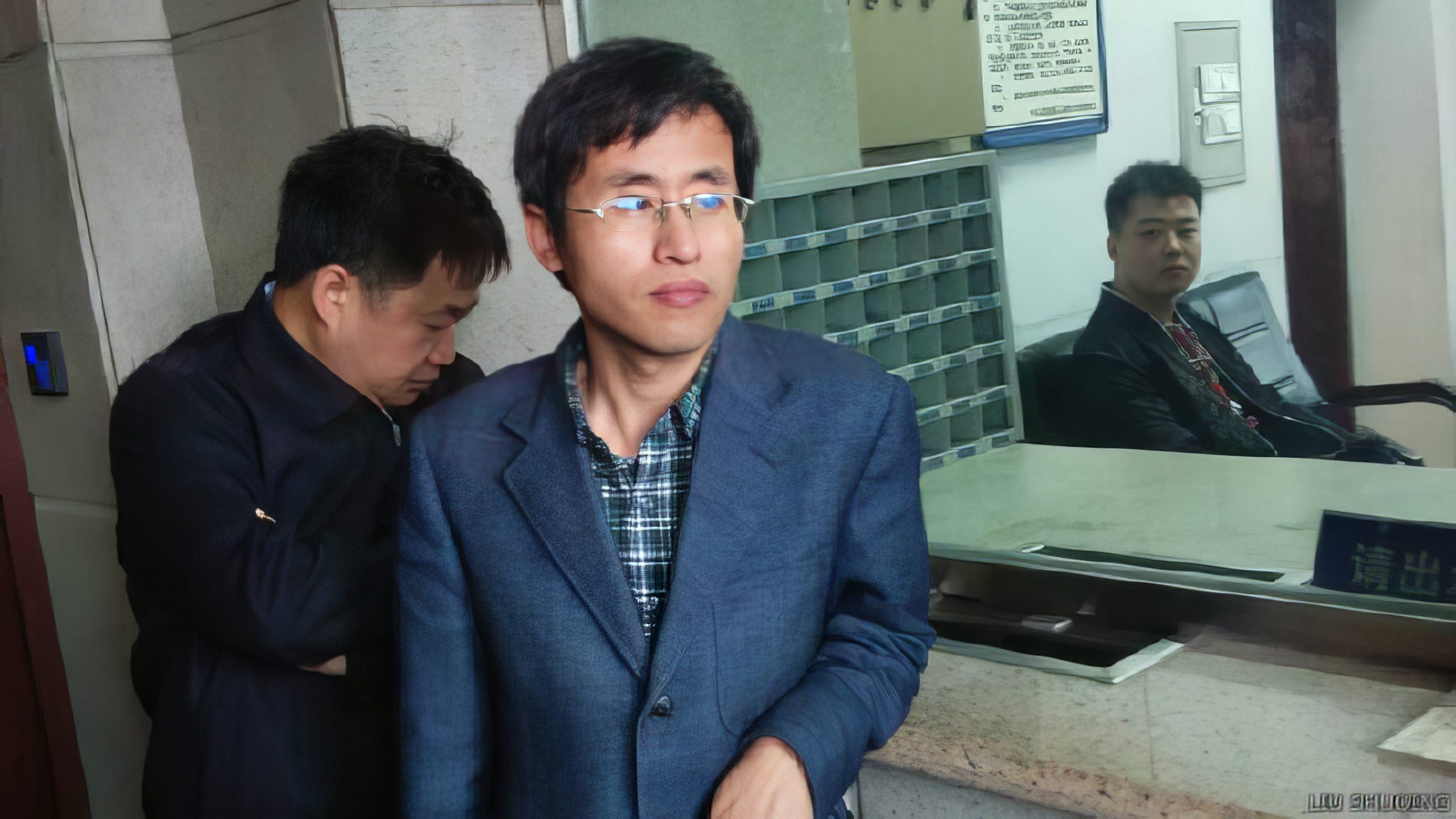
At the same time, the momentum accumulated by China’s civil society had, by around 2010, reached an explosive period of growth. Among the key milestones were the “New Citizens’ Movement” advanced by Xu Zhiyong and Ding Jiaxi,20 and Liu Xiaobo’s involvement in the “Charter 08” initiative.21
For lawyer Lu Miaoqing, now working on Chinese human rights issues in New York, the vibrancy of civil society in those years remains vivid. She recalls that before the 709 Crackdown in 2015, although policies such as the “Seven Do Nots” and the “Sixteen Points” already signaled that the relatively open atmosphere of the earlier period would soon vanish under Xi Jinping, some of civil society’s energy was still carrying forward. It was in that same year that she took on China’s first lawsuit against forced sterilization—the case of Xia Runying in Jiangxi.
Lu still remembers the first time she met Xia Runying. In her thirties, Xia already looked careworn and aged. After giving birth to two daughters, she was in poor health and could not “respond to the government’s call” to undergo sterilization. But one early morning in 2012, more than twenty men sent by the local authorities stormed into her home, dragged her to the township health clinic, and forced her husband to sign a consent form before subjecting her to sterilization. She was left severely injured in both body and mind. Long afterward, she still suffered abdominal fluid buildup, had difficulty walking, and lost all capacity to work.
In China, the implementation of its family-planning policy was often brutal and coercive. But because it was considered a “national policy,” there was no “room for negotiation.” Cases like Xia Runying’s almost never entered legal proceedings. Lu Miaoqing devoted great effort to studying the issue and became one of the few lawyers familiar with China’s family-planning regime. “Later, I learned that some female lawyers had themselves been forced to have intrauterine devices inserted,” she said.
Lu Miaoqing recalls that just to get Xia Runying’s case formally registered, she had to visit five different courts in Jiangxi. What left the deepest impression on her was a judge at the Jiangxi Provincial High Court who, upon seeing Xia’s complaint, said flatly: “We don’t accept family-planning cases.”
Thanks to Lu’s persistence, a court eventually agreed to docket the case. However, it then ruled that the case did not fall within the jurisdiction of the courts, on the grounds that “family planning is a matter of national policy.” Although Xia Runying did not receive justice, the case was widely reported in the media, and created a rare moment of public scrutiny and debate over the issue of family planning.
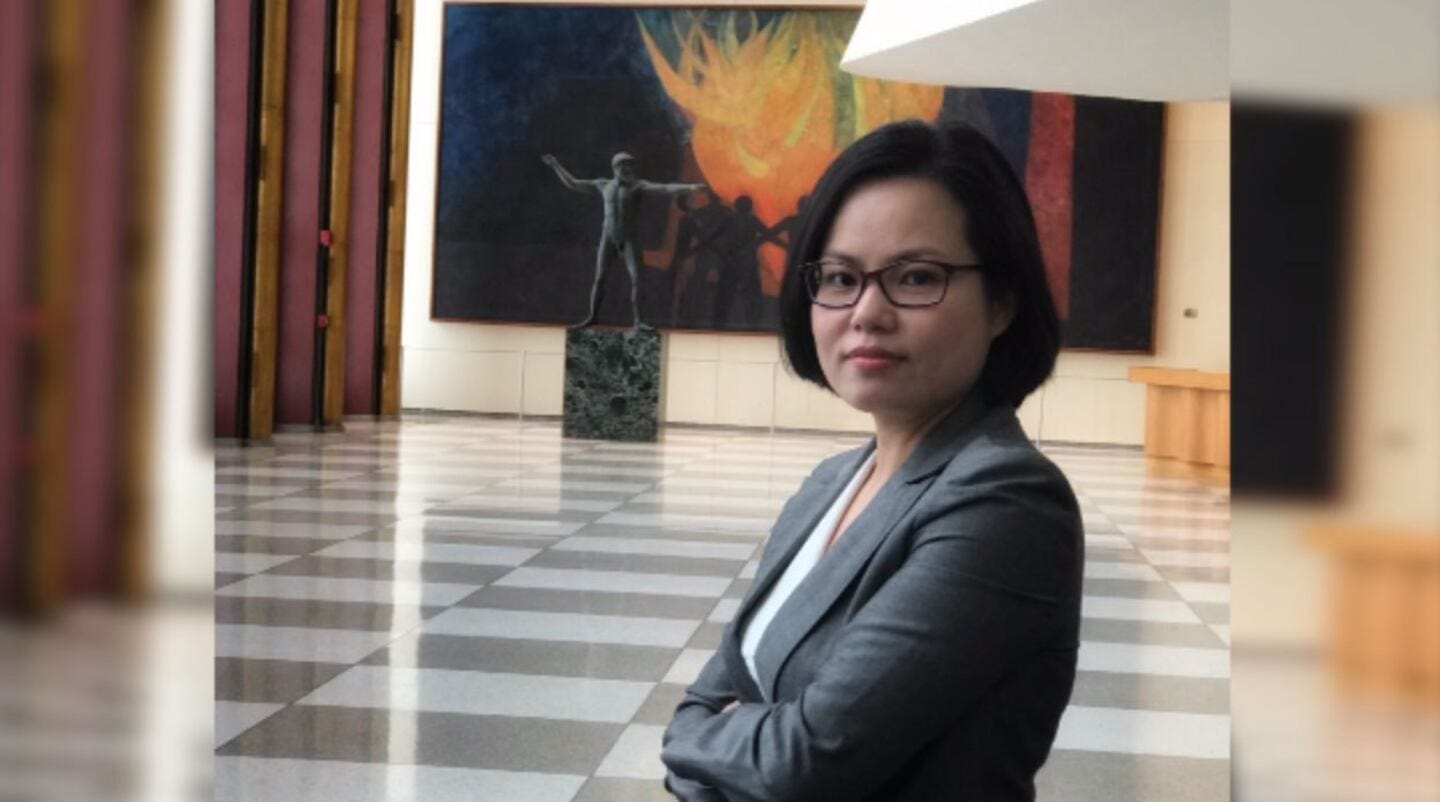
As a woman, Lu Miaoqing has always paid attention to reproductive rights issues. She recalls that lawyer Wu Youshui once filed requests for the disclosure of information on the collection of family planning fines, which went ignored by a number of provinces. In response, she organized a joint letter with 14 women lawyers, sending it to the National Health and Family Planning Commission to demand transparency.
Lu recalls that before 2015, lawyers and NGOs collaborated closely on social issues. As early as 1996, lawyer Guo Jianmei, a Peking University law graduate, had joined together with faculty members at the university to establish the Women’s Law Research and Service Center at Peking University Law School (hereafter ‘Women’s Center’), which actively defended women’s rights. Around the year 2000, with the rise of market-oriented media, the impact of such efforts was amplified through the media’s agenda-setting role, and this kind of collaboration became increasingly frequent.
The “Women’s Center,” where Guo Jianmei worked, was the first nonprofit grassroots organization in China devoted to women’s legal aid and research. According to public reports, by 2009 the center had already provided free legal assistance to nearly 100,000 people and handled close to a thousand cases. In fact, during that period many lawyers and NGOs became involved in issues relating to citizens’ rights. Organizations such as Aizhixing, Yirenping, and Gongmeng (the Open Constitution Initiative, founded in 2003 by Xu Zhiyong, Zhang Xingshui, and others, formerly the Sunshine Constitutionalism Social Science Research Center) were among the most prominent—and in all of them, public-interest lawyers were a constant presence.
In May 2009, when the “Deng Yujiao stabbing case”22 in Enshi, Hubei made national headlines, Xia Lin, Wu Gan (“the Butcher”), and others traveled to the scene to show high-profile support. What is less well known is that the Women’s Center also became actively involved and sent lawyers to the location. Alongside Yirenping, the center also co-organized a “Legal Seminar on the Defense of Women’s Human Rights and Dignity in Connection with the Deng Yujiao Case,” leading the legal response to the case and joining the “Women’s Solidarity Group” formed in her support.
Born in the 1980s, Lu Miaoqing entered the rights-defense lawyers’ circle in 2010. She recalls that women lawyers were highly active at the time. In 2013, she and Wang Yu, Huang Yizhi, and others launched the “Women Lawyers’ Public-Interest Collaboration Network,” aimed at cultivating gender equality and anti-discrimination awareness among lawyers. Human rights lawyers such as Wang Yu and Chi Susheng also actively participated. Lu remembers that one training session in Xi’an drew more than forty lawyers, and in total some two hundred lawyers took part in trainings through the network.
It was also during this period that Lu met civic activists including Lu Jun, Liu Wei, Huang Xuetao, Cheng Yuan, and Lei Chuang.23 She recalls being especially struck by Lei Chuang—when they met, he carried a brick in his hand, and he even posed with one in photos as a visual pun on “brick-throwing.”24
Lu Miaoqing recalls that there were many [public interest] training programs offered at that time. For example, the All China Lawyers Association had already been running a public-interest lawyer training program for several years; she was a participant in the sixth session in 2012, where she studied materials such as Robert’s Rules of Order. In Beijing, she remembers one occasion when lawyer Tang Jitian gathered everyone for a meal. The discussion turned into a heated debate over the defense strategy of “legalizing political problems and technicalizing legal problems,”25 and whether such an approach risked blurring the core issues. As a newcomer then, she found it all novel and exciting. What stayed with her most was the “drive and vitality” that everyone radiated.
4
Human Rights Lawyers Break Forbidden Ground: Defending Falun Gong
April 20, 2025, marked lawyer Gao Zhisheng’s 61st birthday. Since August 2017, when he was forcibly disappeared from his small family home in northern Shaanxi, there has been no trace of him for eight long years. In her anguish, his wife Geng He wrote an undeliverable letter: “No matter where you are, take good care of yourself. Whether we see each other or not, we love you!”
Among China’s human rights lawyers, Gao Zhisheng was a pioneer. As Geng He has said, Gao began practicing law in 1996, and his actual years in practice amounted to less than a decade. By contrast, the time he has spent under surveillance and enforced disappearance has already stretched to nearly twenty years.
In a 2019 essay, Teng Biao recalled Gao Zhisheng. He remembered that at the end of December 2004, he came across an open letter on the internet addressed to the National People’s Congress [by Gao Zhisheng] about the persecution of Falun Gong, a letter that left a deep impression. “By then, the large-scale persecution of Falun Gong had been going on for five years, yet people in China remained utterly silent, as if it had never happened. For a lawyer to make a public appeal on this issue meant taking enormous risks; it required extraordinary courage.” It was then that he remembered the name Gao Zhisheng.
In 1999, the Chinese authorities labeled Falun Gong a “cult” and launched a sweeping repression campaign, triggering a flood of related cases. Gao Zhisheng, who was born into a poor farming family in Jia County, northern Shaanxi, had long harbored a strong sense of compassion for the downtrodden. After leaving the army, he passed the national bar exam in 1995 and, in 2000, moved from Xinjiang to Beijing to practice. He quickly gained renown for representing rights-defense cases on behalf of vulnerable groups, and soon after began taking on a large number of Falun Gong cases.
From October to December 2005, Gao Zhisheng wrote three open letters to then–Communist Party General Secretary Hu Jintao and Premier Wen Jiabao, exposing the systematic torture of Falun Gong practitioners and calling on the authorities to investigate what he described as “a massive human rights disaster.”
In doing so, Gao confronted one of the harshest taboos in China’s human rights landscape, and repression came swiftly. In 2006, the law firm where he was a partner was shut down, and he himself was sentenced to three years in prison, suspended for five years, on charges of “inciting subversion of state power.” During his probation, he spent most of his time under surveillance or forcibly disappeared. At the end of 2011, he was sent to Shaya Prison in Xinjiang, where he was held in solitary confinement for three years. After his release in August 2014, Gao was placed under house arrest in a small mountain village in northern Shaanxi. Finally, on August 13, 2017, he vanished completely, severed from all contact with the outside world.
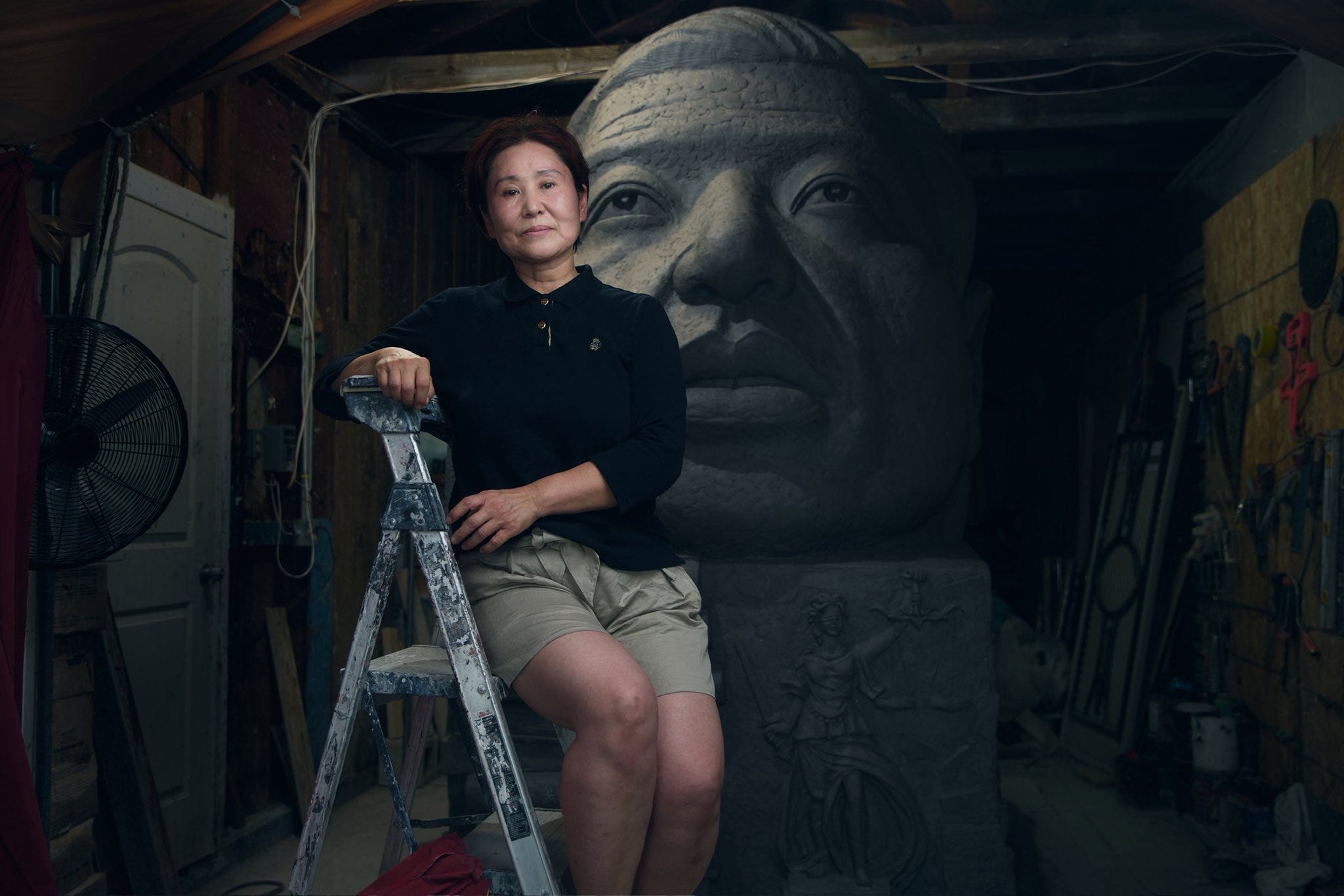
In 2009, another lawyer who defended Falun Gong practitioners, Wang Yonghang, was sentenced to seven years in prison. He later said that it was Gao Zhisheng’s influence that led him to begin taking on Falun Gong cases. After he wrote to China’s highest judicial authorities, prison soon followed.
“Other areas in China at the time were relatively more open — at least information could emerge,” Tang Jitian later recalled. “But when it came to the Falun Gong community, the government maintained an extremely high-pressure stance. Stigmatization, collective punishments, enforced disappearances, and torture were all widespread. This was the most brutal of all fields: there was no oversight, and the media could never report on it. It wasn’t handled as a legal issue, but as a political one.”
After moving to Beijing to practice in 2007, Tang Jitian quickly threw himself into the rights-defense field, representing Falun Gong practitioners as well as other rights cases, while also actively promoting direct elections within the Beijing Lawyers’ Association. Repression escalated swiftly. In 2010, he and lawyer Liu Wei both had their licenses revoked, with the authorities citing as pretext their walkout in a Falun Gong case in Luzhou, Sichuan, which was labeled as “disrupting court order.”
“It can be said that while the Falun Gong community was suffering, it also, to a certain extent, led to the creation of many (human rights) lawyers,” Tang reflected. “If you truly put your heart into these cases, the problems you encounter will inevitably drive you to think and question from a human rights perspective.”
He also noted that before Gao Zhisheng there had been a few scattered lawyers who took on such cases, but most limited themselves to technical or doctrinal defenses. Beginning with Gao, however, and continuing with lawyers such as Li Heping, Jiang Tianyong, Wang Yu, Xie Yanyi, and Wang Quanzhang, the defense shifted to arguments grounded in freedom of belief and constitutional rights.
“On the mainland, if a lawyer has never truly defended a Falun Gong practitioner, he cannot grasp just how dire China’s human rights situation really is; if he has never dealt with petitioners, he cannot know the depths of this society’s sickness,” Tang Jitian once wrote on his Twitter in the early years.
In April 2007, at the second-instance trial of Falun Gong practitioner Wang Bo in Shijiazhuang, Hebei, six Beijing lawyers—Li Heping, Li Xiongbing, Zhang Lihui, Li Shunzhang, Teng Biao, and Wu Hongwei—mounted not-guilty defenses for Wang and her parents. Li Heping later recalled that their intent at the time was to create a model defense for such cases. Their defense statement, “The Constitution Above All, Belief Is No Crime,” came to be regarded as a comprehensive expression of Chinese lawyers breaking into the forbidden zone of defending Falun Gong.
For human rights lawyers in China, defending Falun Gong was without question a turning point in their professional careers and in their lives. It was a brutal and dangerous road, where torture and fear were constant companions.
In 2014, the “Jiansanjiang Incident” in Jiamusi, Heilongjiang, marked the last large-scale gathering of human rights lawyers and “citizen observers” rallying together to defend Falun Gong practitioners.
On March 21, 2014, rights lawyers Tang Jitian, Jiang Tianyong, Wang Cheng, and Zhang Junjie, along with several citizens, went to the “legal education center”26 at Qinglongshan Farm under the Jiansanjiang Administration of the Heilongjiang State Farms Bureau to demand the release of detained Falun Gong practitioners. Instead, they themselves were unlawfully detained for 16 days. During their detention, they were subjected to torture; medical examinations upon release revealed that all four had suffered multiple broken ribs. As news of Jiansanjiang spread, a steady stream of citizens and lawyers traveled there to press for justice, giving rise to what became known as the “Jiansanjiang Incident.”
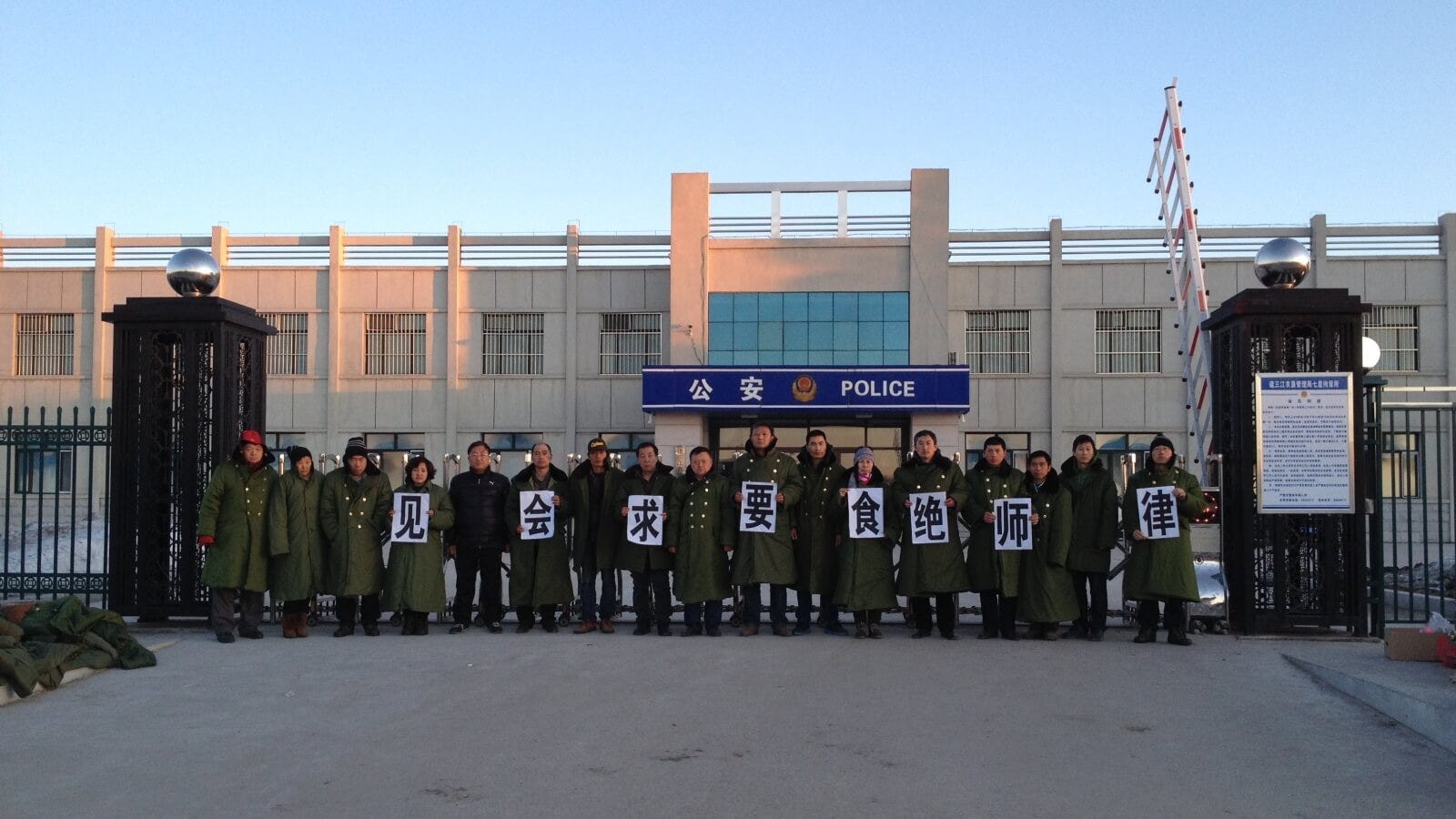
Among those who kept vigil night after night outside the Qixing Detention Center for the detained lawyers were Zhang Lei—known as the “Qingshi (Blue Stone) Lawyer” — as well as Wang Quanzhang and Wang Yu from the Beijing Fengrui Law Firm. In March 2014, Zhang Lei wrote Notes on the Jiansanjiang Hunger Strike, documenting the joint action of lawyers and citizens at the time:
“On the afternoon of March 25, when the workday ended, the detention center still had not arranged for us to meet the detainees. We decided not to move a single step away and spent the night outdoors in front of the detention center. That evening, citizens brought us hot water, padded coats, hats, quilts, and cotton shoes. In the Northeast, night falls especially early, and the temperature dropped below freezing. By the next morning, we found a thin layer of ice on the drainage ditch outside the detention center. Every hour, we shouted toward the detention center, demanding that the authorities arrange, in accordance with the law, for us to meet with the detained lawyers Tang Jitian, Jiang Tianyong, Wang Cheng, and Zhang Junjie. (According to lawyer Zhang Junjie, who has since been released, he could hear his name being called from inside and was moved to tears more than once.)”
Wang Quanzhang still believes that one of the main reasons behind the “709 Crackdown” was the authorities’ retaliation against human rights lawyers for their active involvement in defending Falun Gong practitioners. The reason they began with the Fengrui Law Firm, he argues, was precisely because it had brought together a group of lawyers most vigorously engaged in Falun Gong defense.
This assessment is not without evidence. On July 2, 2015, just one week before the “709 Crackdown” began, Wang Yu appeared in court in Sanhe, Hebei, to represent a Falun Gong practitioner. During the proceedings, after protesting against the court’s procedural irregularities, she was violently expelled from the courtroom.
In Li Fangping’s memory, the “709 Crackdown” was not the first time the authorities had come down hard on human rights lawyers. “The arrest of Liu Xiaobo in 2009 was already a signal; it meant they no longer needed to worry about maintaining the image of the 2008 Olympics,” he recalled in a July 2025 conversation with Wu Lei, speaking from exile. In his view, the brutal threats against human rights lawyers during the 2011 “Jasmine Revolution” were already on par with what later happened during 709.
According to Li’s recollection, during the “Jasmine Revolution” period, a number of lawyers including Teng Biao, Jiang Tianyong, Tang Jitian, Liu Xiaoyuan, and Li Heping were all detained in Beijing. Tang Jitian was held illegally for dozens of days, tortured, and contracted severe tuberculosis. Beijing state security then escorted him back to his hometown, where he remained under long-term surveillance. Li himself was hooded, shoved into a car, and taken to a security compound in the mountains of Changping, on the outskirts of Beijing. There, a group of men beat and cursed him, shouting things like: “We’ll beat you out-of-towner rights-defense lawyers to death!” and “Go back where you came from!”
Li Fangping was only grateful that he himself had not been subjected to electric shocks. Earlier, lawyer Li Heping had been abducted into the mountains and suffered brutal abuse. He recalled that when they met, Li Heping’s body was covered with dense red marks—the traces left by electric shock torture—that sent a chill through him.
5
The “Diehard” Lawyers of the Weibo Rights-Defense Era
On December 22, 2016, the Jiangxi Provincial High Court issued its final retrial verdict in the “May 24 Leping Murder Case,” declaring Fang Chunping and three others not guilty. Fourteen years earlier, they had been forced to confess under torture. After repeated appeals, they were sentenced to death twice, later commuted to suspended death sentences. At last, on that day, this injustice was remedied. The second-in-command of the provincial high court apologized to them in open court on behalf of the court and informed them that they could apply for state compensation.
Outside the courthouse, lawyers Zhang Weiyu, Wang Fei, Yan Huafeng and others shook hands and embraced the four men as they were released. Family members wept with joy at the scene. This major death-penalty case—hailed as a “second Nie Shubin case”27—would hardly have reached such an outcome without the persistence of a group of “diehard” lawyers who refused to give up.
At the time, the lawyers handling the Leping case’s appeal had petitioned the Jiangxi Provincial High Court for access to the case files, but never received a response. Left with no alternative, they resolved to fight [si ke, 死磕] to the end using legal procedures. Beginning on May 11, 2015, a group of lawyers including Zhang Weiyu, together with the plaintiffs’ family members, staged a sit-in at the court entrance demanding their right to review the files. They held placards and shouted slogans by day, and lit candles and stood vigil at night. Their action lasted for 19 consecutive days.
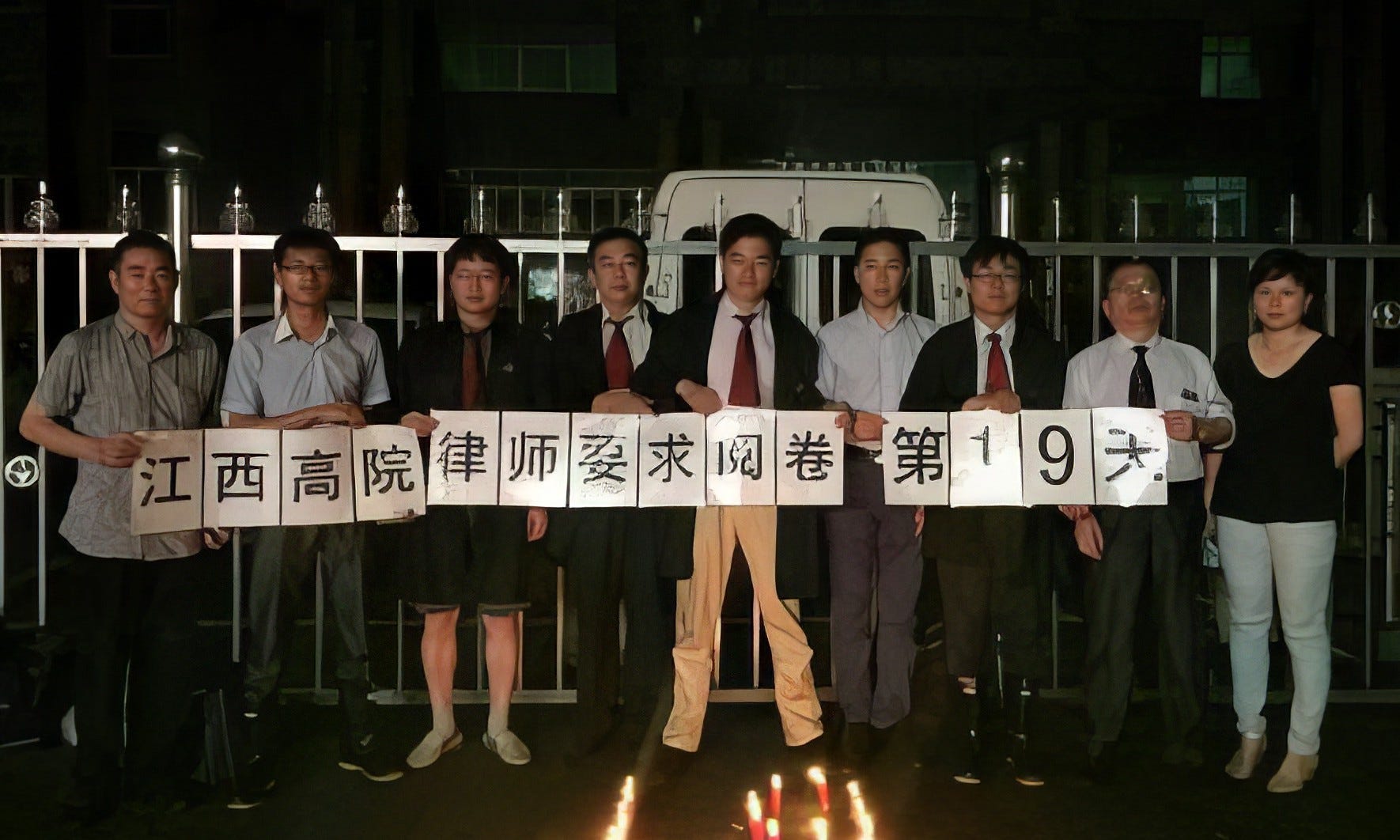
Si ke [死磕], or “diehard tactics,” is considered a type of legal activism that emerged during the Weibo era, and is also a term used to refer to lawyers who resist judicial injustice. When defending criminal cases, lawyers—seeking to compel the judicial organs to follow procedure and handle cases openly and fairly—sometimes resorted to unconventional methods such as live-streaming, sit-ins, or placard protests, thus locking horns with the judiciary. Some of these tactics verged on performance art: lawyer Yang Jinzhou once delivered sweet potatoes to a court president, satirizing him with the message, “If you, as head of the court, refuse to act for the people, you’d be better off going home to sell sweet potatoes.”
Broadly speaking, from 2000 until the Southern Weekly New Year’s editorial incident in 2013, China’s market-oriented media experienced a period of growth and ascent. Coupled with the rise of Weibo, the “diehard” tactics of lawyers often drew the attention of netizens, and frequently attracted investigative journalists and independent media commentary. Together, these forces sometimes helped push cases toward relatively fairer judgments.
Yang Xuelin was a pioneer among the so-called “diehard” lawyers. In his essay On Diehard Lawyers, he recounted in detail the origins of the term. According to him, “diehard” refers to lawyers in criminal defense cases squaring off directly against the unlawful exercise of state power. Although such confrontations had occurred before, their scope and scale had been limited.
Yang Xuelin recalled one of his early acts of “diehard” lawyering. In 2005, environmental pollution sparked mass unrest in Dongyang, Zhejiang, leading to the arrest of many farmers who were defending their rights. Nine Beijing lawyers, including Yang, Wei Rujiu, Li Heping, Jiang Tianyong, Zhang Lihui, and several others, went to provide legal assistance. When confronted with questions of jurisdiction raised by the authorities handling the case, “all the lawyers stood their ground without yielding an inch, and as a result the case had to be transferred by higher authorities to a court outside the locality where it occurred.”
In Yang Xuelin’s view, the Li Zhuang case marked a breakthrough for Chinese criminal defense lawyers’ “collective die-hard fight.”28
In 2009, Beijing lawyer Li Zhuang was arrested in Chongqing while representing a defendant in the “Strike Black” campaign29 personally overseen by then–Chongqing Party Secretary Bo Xilai and Public Security Bureau chief Wang Lijun. He was prosecuted under Article 306 of the Criminal Law, with the charge of “lawyer’s perjury” absurdly justified on the grounds that he had “blinked his eyes.” This raised nationwide concern that Article 306 might be abused, posing a serious threat to the rights of criminal defense lawyers, and for a time drew the attention of public opinion across China squarely onto Chongqing.
In 2017, in an interview with the author of this article, Wu Lei recalled that it was in fact the Li Zhuang case that first led him to lose faith in China’s legal system, prompting him to begin writing regular blog posts on Weibo to voice his views. Through the Li Zhuang case, he turned his attention to the legal profession as a whole. In his view, “from this point on, Chinese lawyers truly began to form a community.”
Not long after the Li Zhuang case, in June 2011, four lawyers, including Yang Zaixin, who were representing defendants in the “November 14 Beihai Murder and Body-Dumping Case” in Guangxi, were arrested on suspicion of “obstructing testimony.” This once again drew nationwide attention from the legal community and evolved into what became known as the Beihai Incident.
At the time, dozens of lawyers, including Wang Xing, rushed to Beihai to form a defense team, taking over the cases from their detained colleagues. In a hostile environment, the lawyers were pursued and beaten by unidentified assailants, and subjected to obstruction, threats, and abuse at the hands of local police.
With national media outlets rapidly picking up the story, three of the lawyers were eventually released, leaving only Yang Zaixin still in custody. In November 2011, the Beihai case went to trial and lasted 22 days, setting a record for the length of criminal proceedings in open court. More than 100 lawyers from across the country participated in the defense. In 2013, the alleged “ringleader” Pei Jinde was acquitted and released in court, while four other defendants were also cleared of the charge of intentional injury. The lawyers and witnesses who had been falsely accused and detained by police likewise regained their freedom.
Another landmark case was the “Xiaohe Case” in Guizhou. In 2012, at the Xiaohe District Court in Guiyang, Guizhou Province, 88 lawyers including Zhou Ze appeared together in court to mount not-guilty defenses for 57 defendants accused of “organized crime of a mafia nature.” The show of force was unprecedented. It was also during the Xiaohe Case that the label “diehard lawyers” formally entered China’s legal vocabulary.
According to Yang Xuelin’s recollection, on January 9, 2012, the first day of the retrial of the Xiaohe Case in Guiyang, a thrilling and intense clash erupted between the defense and the prosecution over numerous procedural issues. At lunch, lawyer Chi Susheng, a Northeasterner affectionately known among her peers as “Sister Chi,” turned to him and remarked: “It seems like going ‘diehard’ is the only way forward.”
That evening, Yang Xuelin posted a message on Weibo: “Judging from the performance of the defense lawyers in today’s trial, a new wave of diehard lawyers in China has stepped onto the stage. In order to defend their clients’ interests and safeguard the purity of the law as they understand it, they do not hesitate to risk being expelled from court or having their licenses revoked. I dare predict that in the days to come, the trial will see even fiercer storms.”
Unexpectedly, Yang Xuelin’s words proved prophetic. From the “rights-defense lawyers” to the “diehard lawyers,” and then to the 2013 founding of the “Human Rights Lawyers Group,” which explicitly and unequivocally adopted the banner of “human rights lawyers,” China’s lawyers, while standing watch for one another and forming a spiritual community around the identity of human rights lawyers, were also forced to confront dangers far graver than mere expulsion from the courtroom or revocation of their licenses.
6
The Post-709 Era: Perseverance and Resolve
“Lead me to the rock that is higher than I.” In May 2025, on the eve of the tenth anniversary of the “709 Crackdown,” Wang Qiaoling opened a commemorative essay with this line from the Book of Psalms.
After the “709 Crackdown,” human rights lawyers such as Li Heping and Wang Quanzhang suddenly disappeared, with no news for a long time—Wang Quanzhang remained out of contact for more than 1,000 days. After an initial period of panic and grief, Wang Qiaoling (Li Heping’s wife), Li Wenzu (Wang Quanzhang’s wife), and Yuan Shanshan (Xie Yanyi’s wife), began, with encouragement from fellow members of civil society, to speak out with all their might on behalf of their husbands. They withstood unimaginable pressure and even devised forms of protest such as the “red bucket protest” and “shaving their heads at the courthouse gates” in order to keep international attention fixed on the “709 Case” and prevent that day from vanishing from public memory.
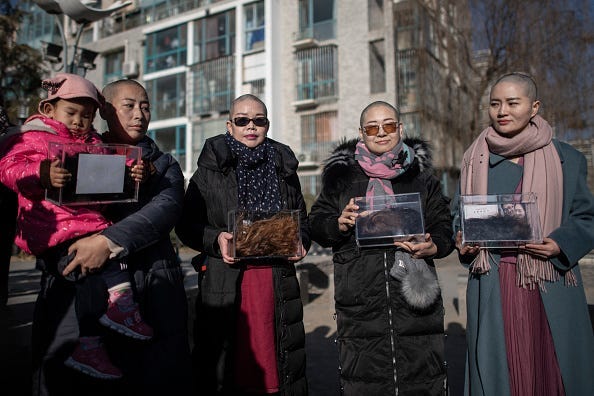
In recent years, although their husbands have been released from prison, the surveillance, tailing, and stalking have not lessened. Surveillance cameras remain permanently installed at their doorsteps, they have been repeatedly forced to move, and their children have often been prevented from attending school. Like Wang Quanzhang and Li Wenzu, Wang Qiaoling was also forced to travel with her child from place to place in search of schooling.
In her commemorative essay, Wang Qiaoling recalled that when her husband was first taken, she agonized over whether she should “speak out” publicly or remain silent. Now, she is completely undaunted. “When a person is struck, one cries out in pain, one calls for help. This is instinct. It does not violate the teachings of the Bible.” Having endured hardship and constant reflection, her faith in Christianity made her stronger.
In Xie Yanyi’s view, although the 709 Crackdown was an unfortunate event, it ultimately helped him find peace through faith. After the crackdown began, he actively spoke out on behalf of detained colleagues and was himself taken from his home on July 12, 2015. At the time, his wife did not yet know she was pregnant; by the time he was released in 2017, their daughter had already been born several months earlier. He once considered naming her Renyu, from the saying “hardship and adversity refine like jade,” but in the end he named her Xin’ai, “love of faith.”
Lawyer Zhou Shifeng was a central figure in the “709” cases. For him, the 2025 anniversary was especially heavy. In a commemorative essay, he wrote: “From that day onward, my law firm was destroyed, my home raided, my property confiscated. In 2024, my wife passed away under the combined weight of physical and psychological trauma. My young daughter no longer calls me ‘father.’ The 709 incident brought me not only imprisonment, but also the complete destruction of my life.”
Two years after Zhou Shifeng’s release, his wife Zhang Meiying passed away from illness at the age of just 56. Zhang, who had also worked at Fengrui Law Firm, saw her health deteriorate after the 709 Crackdown. With her husband imprisoned for seven years, her pre-existing cerebral and cardiac conditions worsened until she could no longer recover.
Looking back a decade later, Zhou Shifeng reflected: “The 709 Crackdown was an organized, planned, and systematic act of state violence. Its goal was to uproot the seeds of civil society, to wipe out those Chinese lawyers with the most independent spirit, and to destroy the final line of defense for the rule of law. It marked the turning point of China’s complete legal collapse—a state-orchestrated cleansing of the soul.”
On September 22, 2022, the very day Zhou Shifeng was released from prison, Fu Zhenghua, the former Minister of Justice accused of orchestrating the “709 Crackdown” and persecuting lawyers and citizens (he had been Vice Minister of Public Security at the time), was sentenced to death with reprieve on bribery charges. The following day, former Vice Minister of Public Security Sun Lijun received the same sentence on the same charge. Neither man is eligible for commutation or parole. News that Fu and Sun had ended up in the dock themselves drew ridicule and mockery from lawyers. Some joked that, if the two wished, they would be happy to provide them with legal defense on appeal.
Since his release in February 2019, Jiang Tianyong has been living at his parents’ home in Xinyang, Henan. Five years on, he remains a key surveillance target for the authorities. His wife, Jin Bianling, lives in the United States with their child.
Many of the human rights lawyers who once made their mark in the public arena are now barred from leaving the country. The separation from their families, not knowing when they will see each other again, is the deepest pain they carry with them. One of the most active civil society figures of the era, Guo Feixiong, has not seen his wife Zhang Qing and their two children in the United States for more than a decade. In January 2022, Zhang died of illness in Maryland. Earlier, the authorities had refused to allow Guo to leave the country, preventing him from accompanying her on her final journey. At the time of her passing, he was imprisoned for a third time on charges of “inciting subversion of state power,” and in May 2023 he was sentenced to another eight years.
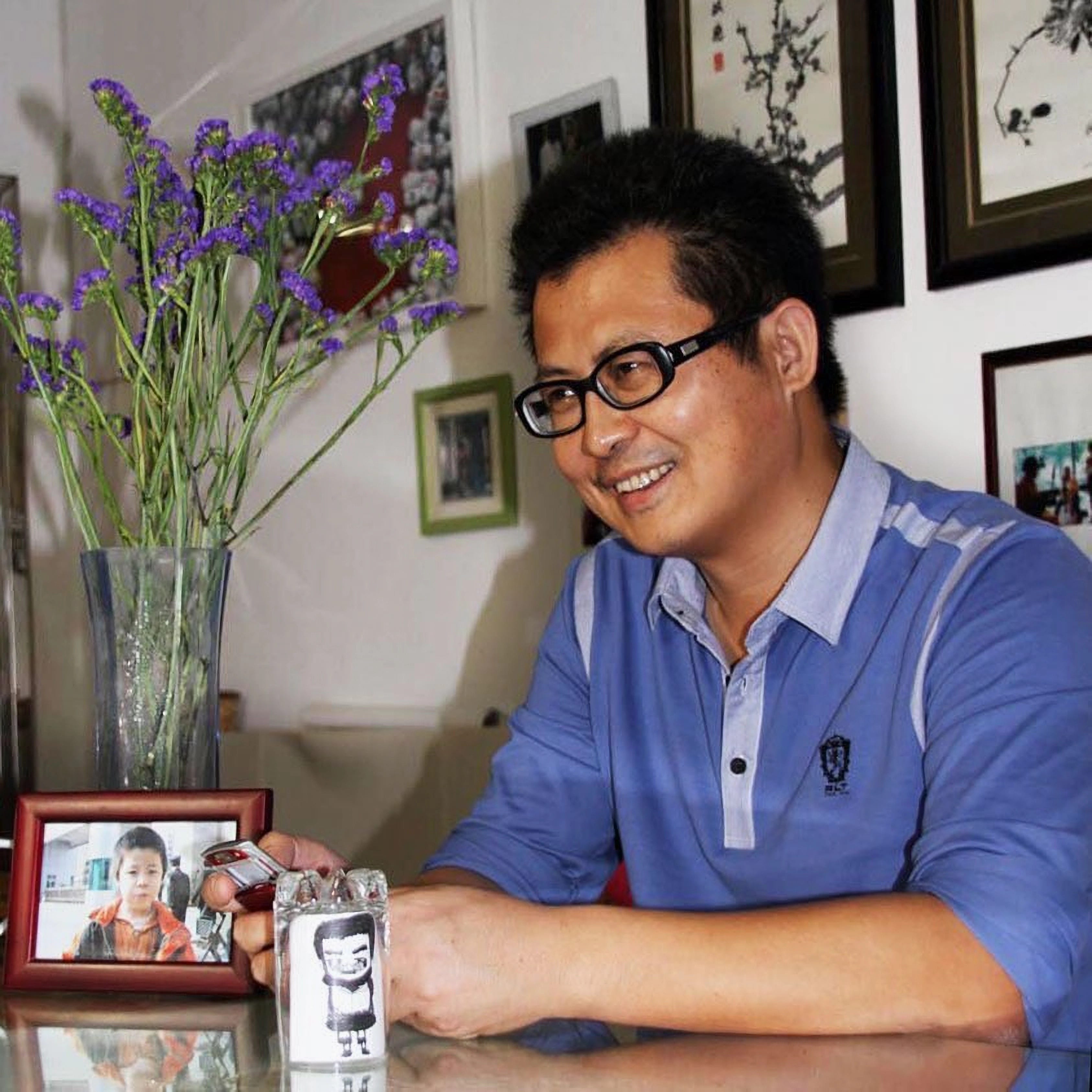
On July 9, 2025, at a commemorative event in Washington DC, Bao Zhuoxuan was invited to once again publicly share his experiences during the 709 Crackdown. After his parents were imprisoned, he lived with his grandmother, under constant, close surveillance by the police. Later, he crossed the border into Thailand, but was captured and forcibly repatriated, though at the time he was still only a minor.
As Bao stepped down from the stage, Lu Miaoqing noticed that he was trembling slightly. She said that although Bao had grown taller, stronger, and more resilient than when she had last seen him a few years ago, hearing him speak of his ordeal today still left her deeply saddened and enraged. The sacrifice, endurance, and suffering borne by human rights lawyers and their families cannot possibly be captured in full.
On November 26, 2021, Liang Xiaojun, who lives in Beijing, received a notice of proposed revocation of his lawyer’s license, becoming the fifth human rights lawyer to have his license suspended or revoked that year (the other four being Lu Siwei, Ren Quanniu, Xi Xiangdong, and Lin Qilei). Having been involved in human rights cases for 14 years, Liang Xiaojun wasn’t surprised. His peers recognized him as a man of unwavering convictions, yet he was known for his quiet and gentle demeanor. Even in a world where Chinese authorities frequently suppress lawyers by revoking their licenses, Liang Xiaojun’s experience still shocked the human rights lawyer community.
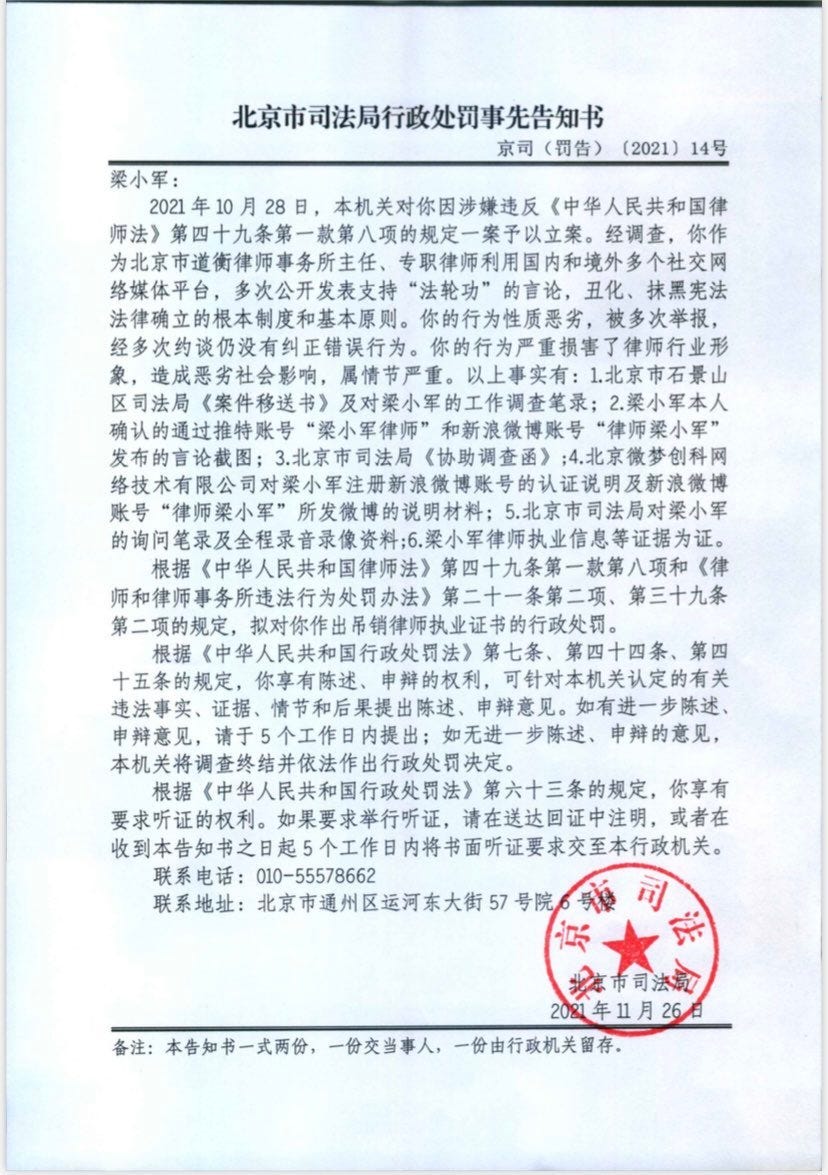
“I have always been willing to pay attention to the vulnerable, to listen to voices the world does not hear, and to do what little I can to help them. Perhaps I am, like them, a vulnerable person, crushed by this harsh and unfeeling world. I am grateful for the chance to be a lawyer, because it allowed me to know them—and that way, I was not so alone,” wrote Liang Xiaojun that day.
Liang was also among the first to suggest renaming the original “China Human Rights Lawyers Service Group” to the “Human Rights Lawyers Group.” In 2013, building on the earlier “Legal Aid Group” formed during the rights-defense period, lawyers Tang Jitian, Jiang Tianyong, and Wang Cheng initiated and created the Human Rights Lawyers Group as an open online platform. It was not an organized body, but rather a loose spiritual community. Since its founding on September 13, 2013, the group has issued statements at each New Year and in response to major rule-of-law events, voicing concern and solidarity. This July 9, on the tenth anniversary of the “709” crackdown, the Human Rights Lawyers Group once again released a statement, aiming to both strengthen bonds within the community and articulate the position of China’s human rights lawyers to domestic and international audiences.
Not long after the launch of the “Human Rights Lawyers Group,” participants came to recognize that democratic life had to begin by practicing it themselves. In 2014, they created a large WeChat group called the “Defend Lawyers’ Rights Group,” which gathered several hundred lawyers. From the outset, they agreed to manage it democratically: to limit the power of the group owner, they introduced an “executive” role and held democratic elections within the group for executives and arbitrators, thereby creating a system of checks and balances. “This was the first time in my life I voted seriously, the first time I campaigned seriously. Even though it was like doing Buddhist rites in a clam’s belly, merely amusing ourselves, it was tremendous fun,” lawyer Liu Shuqing later recalled in an essay. The group was repeatedly shut down, and when it reincarnated for the 66th time in 2024, it was permanently banned and could no longer be rebuilt.
According to people familiar with the matter, in the past two or three years the Human Rights Lawyers Group has also been torn by internal rifts, stemming from sharp differences over major issues such as the U.S. presidential election and how to view Donald Trump. In addition, due to China’s harsh political climate and disappointment with some of their peers, some members have grown disheartened and no longer wish to take part in the group’s activities.
In Chang Weiping’s view, the “Human Rights Lawyers Group” today functions mostly symbolically. Yet he also believes that even with internal divisions, the community of human rights lawyers still exists; and amid collapse and hardship, there remain pockets of perseverance. “Take lawyer Zhang Lei, for example—he continues to take on cases and has never shied away from his identity as a human rights lawyer.”
For Wu Lei, even though he is now in Japan, nightmares still haunt him. In them, sometimes he is pounding the table in court; sometimes they are in the middle of a meeting when the police suddenly burst in. He recalls that many years ago Teng Biao once asked him: “Have you overcome your fear?” At the time, he didn’t understand the question; it was only after the “709 Crackdown,” when his friends were all in prison, that he grasped its deeper meaning. He asked himself: “Are you prepared to be sentenced to more than ten years?” He remembers discarding all his phones, having a taxi driver take him 200 kilometers away, and lying in a hotel waiting to be arrested. But that time, the arrest never came.
“For us, now that we are outside, we should not seek to be caught by them. We can also pursue value in a free environment. Not everyone has to go to prison,” he once said in an interview.
Reflecting on the changes in the environment for lawyers over the past decade, Wu Lei believes that “709” was in fact the starting point of China’s political police taking full control over society. After the 2015 revision of the National Security Law, lawyers effectively became potential enemies of the state. What they did—the ordinary duties of the legal profession—was construed by the state as wielding the law as a weapon for “nonviolent change.”
On July 9 this year, the China Human Rights Lawyers Group issued a statement marking the tenth anniversary of “709,” analyzing the present situation:
“Looking back from ten years on, it becomes all the clearer that it was not an isolated, cautionary blow, but part of a long-planned strategy to eliminate civil society. Human rights lawyers were not the only targets… After a decade of suppression, the space for freedom in society has been all but extinguished. The offline activities of human rights defenders have been frozen, and even speech that does not directly challenge the regime now faces a radically altered environment. The terrifying prospect of digital totalitarianism is coming into view.”
Tang Jitian believes that the Human Rights Lawyers Group is now in a state of preserving the flame—its role is mainly to maintain a sense of presence. “When there is truly no way forward in the present, leave it to the future; don’t try to shoulder it all now.” He feels that the very existence of the group carries meaning.
He said: “Going against the current always comes at a high cost and a heavy price. But at the very least it lets many colleagues know that there is such a group of people. When the situation is grim, one doesn’t necessarily need to say much or do much. What matters is that within you there is still a flame—don’t let it go out. And if the chance comes, add fuel to it.”
For Xie Yanyi, the 709 Crackdown a decade ago was a turning point in his life. In 2017, after regaining his freedom, he wrote a long essay titled Notes on 709 and, upon release, immediately disclosed that other lawyers had likely been subjected to torture. He recalled that at the time he was torn: on the one hand, he was determined to fulfill the promise he had made in prison that he would speak out about the existence of torture; but on the other, afraid of being arrested again and separated once more from his newborn daughter. The inner conflict was agonizing. Today, he still holds fast to the ideals of a human rights lawyer, but devotes more of his time to the pursuit of faith. “For me, one awakened life is worth more than the whole world,” he said.
“Over these ten years, it is true that many human rights defenders have gradually left the stage. But many more have chosen to hold their ground… Living in such a time, remember Rilke’s line: What victory is there? To endure is everything.” So declared the Human Rights Lawyers Group in its statement on the tenth anniversary of 709.
On August 5, 2025, lawyer Lu Siwei completed his prison term and left the detention center in Chengdu, Sichuan, reporting immediately to a community correction center. His wife, Zhang Chunxiao, who lives on the West Coast of the United States, longs for the day when she can be reunited with her husband—when the family can embrace tightly and never be separated again. A veteran literary editor, Zhang had long been unaware of what had happened to her husband. Only after leaving China, when she no longer needed to bypass the firewall, did she learn the story of “709” and of her husband’s experiences alongside his fellow lawyers. She also came to realize: “Lu Siwei turned out to be exactly the kind of person I deeply respect.”
She remembers that when they married in 2007, the two of them had many differences, yet they both loved the film The Shawshank Redemption, and recalled its famous line: “Some birds aren’t meant to be caged. Their feathers are just too bright.”
“Die-hard” lawyers: This term, commonly used by the Chinese legal community and the public, refers to lawyers who, in cases involving human rights or public interest, protest against actions taken by courts, procuratorates, public security agencies, and other agencies that violate legal procedures or laws and regulations, and who persistently argue their cases. The Chongqing Li Zhuang case, the Beihai case in Guangxi, the Leping case in Jiangxi, and the Qing’an Xu Chunhe case are considered landmark cases led by “die-hard” lawyers. Common methods used by “die-hard” lawyers include establishing expert advisory panels and lawyer observation groups, using social media platforms to voice their opinions, and engaging in performance art as a form of protest.
Leping Death Penalty Case: On May 24, 2000, Jiang Zecai, owner of the Green Treasure Supermarket in Leping City, Jiangxi Province, was found dead in Tianban Village, Zhongdian, east of Denggao Mountain. Jiang’s female companion, Hao Qiang, had also disappeared. [Translator’s Note: Although Hao’s body was never found in its entirety, Hao’s arm was discovered several days later.] Subsequently, public security authorities determined that Huang Zhiqiang, Fang Chunping, Cheng Fagen, Cheng Lihe, and Wang Shenbing were responsible for the two deaths. With the exception of Wang Shenbing, who fled, the other four were sentenced to death in the first instance, but their sentences were commuted to suspended death sentences in the final instance. All four claimed the charges were false and that they had been tortured into confessing. Their families persisted in appealing the case. In December 2016, after 14 years of detention, the Jiangxi Provincial High People’s Court overturned the original verdicts, acquitting the four. Wang Shenbing was not prosecuted.
Case of the 12 Hong Kongers’ Illegal Border Crossing: In August 2020, 12 young Hong Kong residents, including Deng Qiran, Qiao Yingyu, and Li Yuxuan, who were charged with various offenses during the “Anti-Extradition Bill” protests, attempted to illegally cross the border from Hong Kong to Taiwan by speedboat. They were intercepted and detained by the Guangdong Coast Guard. In December 2020, the Shenzhen Yantian District People’s Court sentenced ten of the detainees to prison terms ranging from seven months to three years for “organizing others to illegally cross the border” and “illegally crossing the border.” The remaining two youths, as minors, were deported back to Hong Kong and remain in the custody of Hong Kong police.
Jiansanjiang Case: On March 20, 2014, human rights lawyers Tang Jitian, Jiang Tianyong, Wang Cheng, and Zhang Junjie, along with several relatives of their clients, went to the Qinglongshan Legal Education Base of the Jiansanjiang Management Bureau of the Heilongjiang Provincial Land Reclamation Bureau to demand the release of illegally detained Falun Gong practitioners. Subsequently, 11 people, including the four lawyers, were administratively detained by local police. After the news broke, numerous lawyers from across China flocked to the Jiansanjiang Qixing Detention Center, staging a sit-in and hunger strike in solidarity.
Translator’s Note: Terminus2049 was the name of a GitHub repository of banned articles on the coronavirus pandemic that was maintained by Chen Mei and Cai Wei, who were convicted of “picking quarrels and stirring up trouble” in 2018.
Li Tiantian Incident: In December 2021, Li Tiantian, a teacher in Yongshun County, Xiangxi, made a Weibo post in support of Shanghai teacher Song Gengyi’s comments questioning the Nanjing Massacre figures. This post was reported online and she was subsequently issued a warning by the local education bureau and police station. The county education bureau and police station dispatched personnel to Li Tiantian’s home and forcibly took her to a mental hospital for treatment, which garnered widespread online attention.
Chen Pinlin: Documentary director Chen Pinlin filmed and documented the 2022 protests on Urumqi Middle Road in Shanghai, where citizens mourned the victims of the Urumqi Fire and opposed the “Zero-COVID policy.” On the first anniversary of the “White Paper Movement,” Chen Pinlin posted his documentary online and was subsequently arrested by Shanghai police. On January 6, 2025, Chen Pinlin was found guilty of provoking trouble by Shanghai Baoshan People’s Court and sentenced to three and a half years in prison.
The Southern Weekly New Year’s Message Incident: In January 2013, Southern Weekly staff claimed that, under pressure from the News Office of the Propaganda Department of the Guangdong Provincial Committee of the Communist Party of China, they had significantly edited the New Year’s message and related content in the 2013 New Year’s special issue, bypassing the publication’s normal publishing process. These edits included several common sense errors. After the New Year’s special issue was published on January 3rd, these obvious editorial errors were discovered by readers and began to spread on Weibo. Later, some Southern Weekly staff protested. On January 4th, over 50 former editors and reporters also signed an open letter of protest. As the incident escalated, many celebrities and influential figures actively spoke out, and hundreds of netizens spontaneously gathered in front of the Southern Media Group building in Guangzhou and the Beijing News Center, laying flowers and holding banners in support of the Southern Weekly editorial team. The incident sparked widespread public concern about censorship and press freedom in mainland China.
The “Four Gentlemen of the New Youth Society” case: In August 2000, several Peking University teachers and students established the “New Youth Society” to discuss issues of democracy in China. On March 13, 2001, group members Xu Wei, Yang Zili, Jin Haike, and Zhang Honghai were secretly arrested. In 2003, the four were convicted of “subversion of state power” and sentenced to prison terms ranging from 8 to 10 years.
Translator’s Note: “Custody and repatriation” was a police procedure used in China from 1982 to 2003, in which police could detain and relocate anyone who did not have a valid resident permit, or hukou, for the area. “Custody and repatriation centers” were detention camps meant for holding these detained individuals, who were frequently subject to prolonged detention, forced unpaid labor, beatings, and other ill-treatment.
Teng Biao’s involvement in #MeToo: In June 2023, as the #MeToo movement raged in Taiwan, Xinyu (a pseudonym), former vice president of the Independent Chinese PEN Center and former special correspondent for Radio Free Asia, accused Teng Biao of an attempted rape in a Dharamsala, India, hotel in 2014. In response, Teng Biao issued a public apology, calling his actions “an unusually clumsy courtship,” but denied the rape accusation. Xinyu rejected the statement, arguing that it distorted the facts.
Translator’s Note: This case sparked a debate around police brutality after the husband was beaten and hospitalized. For more information, see https://www.circle19.org/2002-police-brutality/.
Chen Guangcheng lost his sight due to illness in childhood. He later taught himself legal knowledge and defended the rights of villagers and people with disabilities, earning him the nickname “the barefoot lawyer” in the media. In 2005, Chen Guangcheng exposed the Linyi Municipal Government in Shandong Province’s implementation of “family planning” policies, which included arbitrary arrests of violators, forced abortions, and induced labor. As a result, Chen was detained by the local authorities. In June 2006, the Linyi Intermediate People’s Court sentenced Chen Guangcheng to four years in prison for “intentional destruction of property” and “gathering a crowd to disrupt traffic.” Chen Guangcheng was released in 2010, but has since been placed under house arrest with his wife and daughter. In May 2012, with assistance from various parties, Chen Guangcheng and his family arrived in the United States, where they have lived ever since.
Gao Zhisheng, a native of Jiaxian County, Yulin, Shaanxi Province, is a renowned Chinese human rights lawyer. He has represented numerous individuals bringing cases against the government and defended Christians, Falun Gong practitioners, and other human rights activists. In December 2006, the Beijing No. 1 Intermediate People’s Court sentenced Gao Zhisheng to three years in prison, suspended for five years, for “inciting subversion of state power.” During his suspended sentence, Gao Zhisheng was repeatedly tortured and prevented from contacting the outside world. After his release from prison in 2014, Gao Zhisheng remained under strict surveillance and house arrest in Shaanxi. In June 2017, Gao Zhisheng published his memoir, “Stand Up China 2017 — China’s Hope: What I Learned During Five Years as a Political Prisoner,” in Taiwan. Two months later, police took him from his home in Shaanxi back to Beijing for detention, and he has not been heard from since.
The Shaanxi Oilfield Case: This case was once described by domestic media as China’s largest “citizen-versus-official” lawsuit. In 2003, the People’s Government of Jingbian County, Yulin City, Shaanxi Province, nationalized thousands of oil wells and approximately 7 billion yuan in assets previously operated by private capital in northern Shaanxi, citing “national regulations.” This triggered a dispute between the local government and private business owners. In May 2005, representatives of the affected private oil companies hired a legal team to file an administrative infringement lawsuit against the local government, but the case was dismissed by the Shaanxi Provincial High People’s Court. In May 2005, attorney Zhu Jiuhu, representing the case, and several corporate representatives were criminally detained by Shaanxi police on suspicion of “assembling a crowd to disrupt social order” and “illegal assembly, procession, and demonstration.” They were subsequently formally arrested and sentenced.
Guangzhou’s Taishi Village Case: In 2005, residents of Taishi Village in Panyu District, Guangzhou, formed a recall committee and demanded the removal of their village head due to concerns about financial corruption within the village committee. Many human rights activists and lawyers traveled to the area to support the villagers, and the incident garnered national attention due to media reports. However, the recall campaign was obstructed by the Panyu District government. The villagers were violently removed and many were arrested. Ultimately, the campaign failed because the petition failed to meet the legally mandated number of signatures.
Hu Jia Case: Hu Jia, a native of Wuhu, Anhui Province, has long been involved in numerous social movements, including environmental protection, the fight against AIDS, and the fight for democracy and human rights. He has actively supported and rescued Chinese dissidents including Gao Zhisheng and Liu Xiaobo. In late December 2007, Hu Jia was arrested by Beijing police and subsequently sentenced to three and a half years in prison by the Beijing No. 1 Intermediate People’s Court for “inciting subversion of state power.”
Translator’s Note: Gan dan xiang zhao is a Chinese proverb that means to treat one another with sincerity and devotion, speaking from one’s heart. It translates literally as “Liver and Gallbladder Illuminate One Another.”
Translator’s Note: “Walking Lightly Over Waves” is a famous martial arts movement.
New Citizens’ Movement: The “New Citizens’ Movement,” started by human rights lawyer Xu Zhiyong and others, is a collective term for a series of social movements centered on the principles of “freedom, justice, and love.” The New Citizens’ Movement had two core principles: politically, to push the nation as a whole toward a peaceful transition to constitutional government; and socially, to promote the transformation of society from one of “subjects” to one of “citizens.”
Charter 08: In December 2008, to mark the 60th anniversary of the Universal Declaration of Human Rights, Zhang Zuhua drafted and Liu Xiaobo and others revised and published Charter 08, inspired by Czechoslovakia’s dissident manifesto Charter 77. Charter 08 was initially signed by 303 people from all walks of life. It set out six core principles: freedom, human rights, equality, republicanism, democracy, and constitutionalism. It also advanced 19 specific proposals, including amending the Constitution, instituting checks and balances, establishing democratic lawmaking, ensuring judicial independence, placing public authority in the service of the people, and guaranteeing human rights.
Deng Yujiao stabbing official case: On the evening of May 10, 2009, Deng Guida, director of the Investment Office of the Yesanguan Township Government in Hubei, and two others demanded “special services” from hotel attendant Deng Yujiao. In self-defense, Deng Yujiao used a pedicure knife to stab Deng Guida to death. The case resonated with the nation. Numerous journalists, lawyers, and scholars formed a “Deng Yujiao Support Group” to provide her with public opinion, legal, and litigation assistance. On June 16, 2009, the Badong County People’s Court of Hubei, in its first-instance ruling, found Deng guilty of “intentional injury” but determined that she had acted in excessive self-defense and had turned herself in, and therefore exempted her from criminal punishment.
Lei Chuang’s #MeToo accusation: On July 23, 2018, an anonymous woman published a post accusing Lei Chuang, founder of Yiyou Charity, of sexually assaulting her when she volunteered for the organization’s “Walk to Beijing” benefit hiking event. That same day, Lei Chuang admitted to the assault in a WeChat post and said he was considering turning himself in to the police. On July 24, YiYou Charity issued a statement on its website announcing that Lei had been removed from his duties and replaced as the organization’s legal representative, and that the group would carry out gender-awareness training for staff and adopt anti-sexual-harassment policies.
Translator’s Note: Paizhuan, literally brick-throwing, is slang for blunt criticism.
Translator’s Note: Because criticizing the government is not accepted, this strategy refers to tackling political issues within a legal framework, avoiding moral or political arguments and relying on highly technical arguments regarding procedural or legal violations.
Translator’s Note: “Legal Education Center” is a literal translation; however, these centers are in fact detention centers used for “re-education.”
The Nie Shubin case: The Nie Shubin case is a classic example of a wrongful conviction from the history of China’s legal development, set against the backdrop of the “Strike Hard” campaigns against serious crime in the 1980s and 1990s. On August 5, 1994, a rape and murder occurred in a cornfield in Kongzhai Village, on the western outskirts of Shijiazhuang, Hebei Province. Nie Shubin, a native of Luquan County near Shijiazhuang, was identified as the perpetrator. On April 25, 1995, he was sentenced to death and swiftly executed. Afterwards, Nie’s mother, Zhang Huanzhi, pursued appeals for 21 years. With support from various channels including lawyers, scholars, and media, and with the eventual arrest of the true culprit, Wang Shujin, the Supreme People’s Court retried the case and overturned the original judgment on December 2, 2016, declaring Nie Shubin not guilty.
Translator’s Note: Here, the author once again uses the term “si ke,” meaning the lawyers’ strategy of fighting back through legal procedures.
Translator’s Note: The “Strike Black” campaign, or da hei chu e, literally translates as “striking blackness and eliminating evil.” Led by Bo Xilai, the campaign aggressively and sometimes extrajudicially targeted organized crime.