

Since late November 2025, a fierce, decentralized digital uprising has erupted within the confines of China’s Great Firewall. This is not an organized street movement, but a guerrilla war of public opinion. From the comment sections of Douyin (China’s TikTok) to the “bullet screens” of Bilibili,1 thousands of Chinese netizens (internet users) are throwing themselves into a form of digital protest known to outside observers as the “Great Tower Rush” (#大冲塔运动). Through the window into this scene provided by X (formerly Twitter) accounts such as @GFWfrog and Teacher Li @whyyoutouzhele, the outside world is witnessing a breathtaking scene: the collective roar of a generation that feels it has nothing left to lose.
后附中文版
I. “Tower Rush”: A Political Metaphor in the Cyber Age
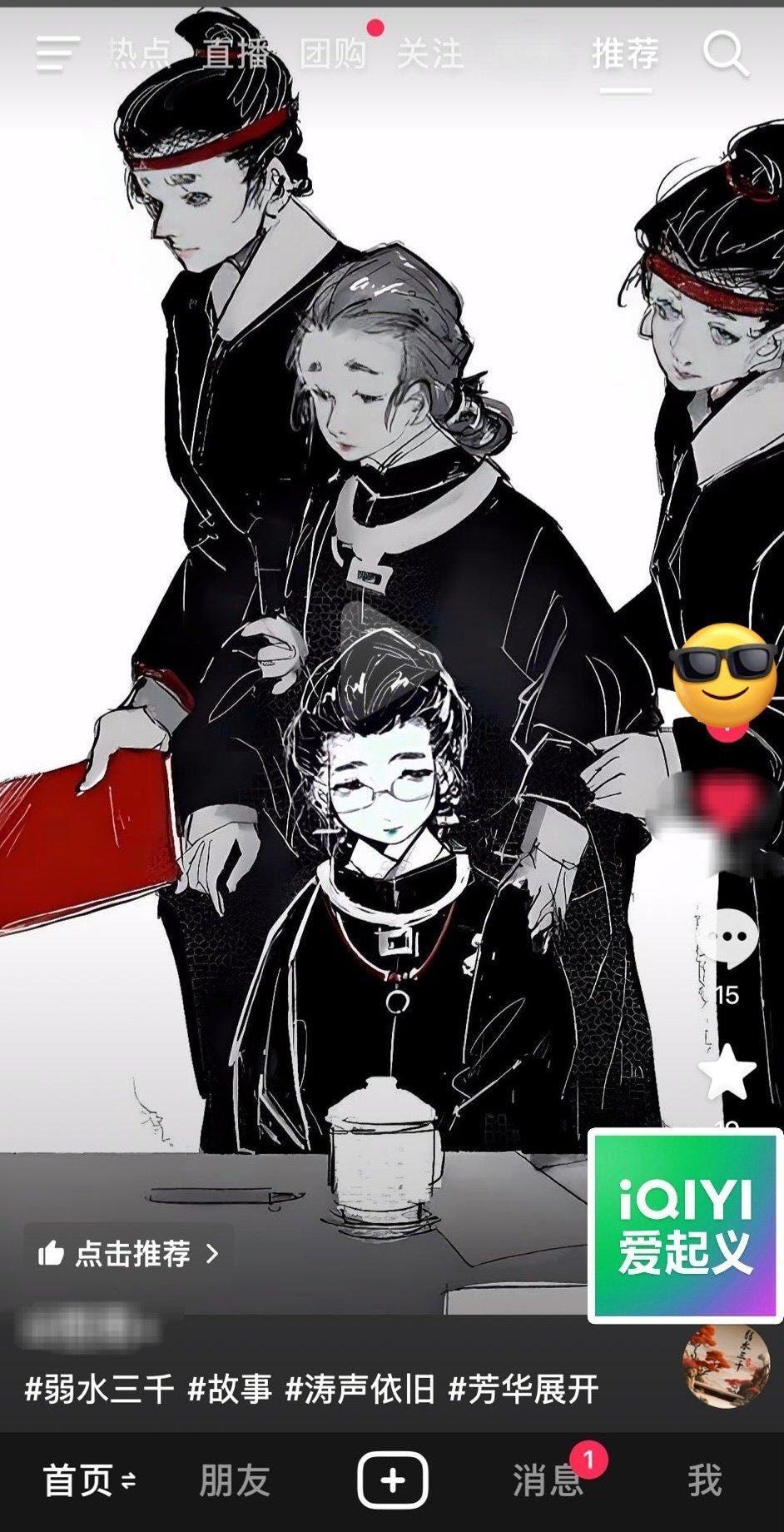
To understand this movement, one must first understand the terminology. “Tower Rush” (chong ta) originates from multiplayer online battle arena (MOBA) games like League of Legends. It refers to a player charging directly at an enemy defensive turret without the protection of minions—a maneuver that usually results in the character’s instant death. Transplanted to the Chinese internet of 2025, the metaphor is grimly precise. The “Tower” symbolizes the authoritarian regime centered on Xi Jinping and its massive censorship apparatus. To “rush the tower” means to publicly post direct criticism of the CCP and its supreme leader. Netizens are fully aware of the consequences: their posts will likely be deleted, their accounts banned, and they face the very real risk of being harassed by the police. Yet, wave after wave, they continue to charge. This “digital suicide squad” tactic marks a psychological turning point: the fear of state retaliation has been outweighed by an overwhelming desire to vent their rage.
II. The “Boomerang” Effect: Why are the “Little Pinks” Defecting?
One defining feature of this uprising is a shift in the composition of participants. Many are former “Little Pinks” (xiaofenhong)—young nationalists who were once the regime’s staunchest defenders. Their defection is the result of a “boomerang effect” in which the state’s aggressive propaganda has returned to strike its own believers. Three key events have shattered their faith: the government’s U-turn on drug offenses, its introduction of a new foreign talent visa, and its stunningly tone-deaf approach to the unemployment crisis.
First, the collapse of the “zero-tolerance” myth was an eye-opening experience for young Chinese nationalists who had a or decades, the CCP has anchored its legitimacy on a “Century of Humiliation” narrative, making “zero tolerance for drugs” an inviolable moral red line. However, when authorities recently attempted to loosen policies by sealing criminal records for minor drug offenses—likely to boost employment statistics—young loyalists felt a deep sense of betrayal. It revealed that their “sacred principles” were merely disposable tools of governance.
Earlier this year, in an effort to enhance its international image of openness and salvage the economy, the government unilaterally introduced the “Foreign Young Science and Technology Talent Visa” (the “K-Visa”). Young Chinese STEM graduates, facing a “graduation means unemployment” crisis, watched foreign peers receive what they perceived as “super-citizen” treatment. This forced them to question whether the CCP is truly “serving the people.”
Lastly, the authorities’ “Let Them Eat Cake” arrogance has been the final straw. Amidst record-breaking youth unemployment, state media (CCTV) released a tone-deaf video claiming a delivery worker was a “digital nomad” who “delivered food to see the scenery.” For millions struggling to survive, this romanticization of their suffering was the ultimate insult.
III. The Art of Resistance: Decoding Dissent
The “Great Tower Rush” is a technological arms race. With Chinese tech companies relying more and more on AI censorship tools to cut costs while complying with the authorities’ censorship requirements, young Chinese have found innovative ways to defeat the algorithms, consolidating into four distinct waves of attack:
1. Targeting the “Emperor”: From Mockery to “Step Down”
The most aggressive front is the direct assault on Xi Jinping’s 13-year rule and apparent ambition for lifetime tenure. Netizens use familial slang like “My Brother” or “My Son” to refer to Xi, or outright insults like “Pig Emperor” and “Wild Dog,” alongside the viral video of a dog strutting on a red carpet, thoroughly stripping the leader of his majesty.
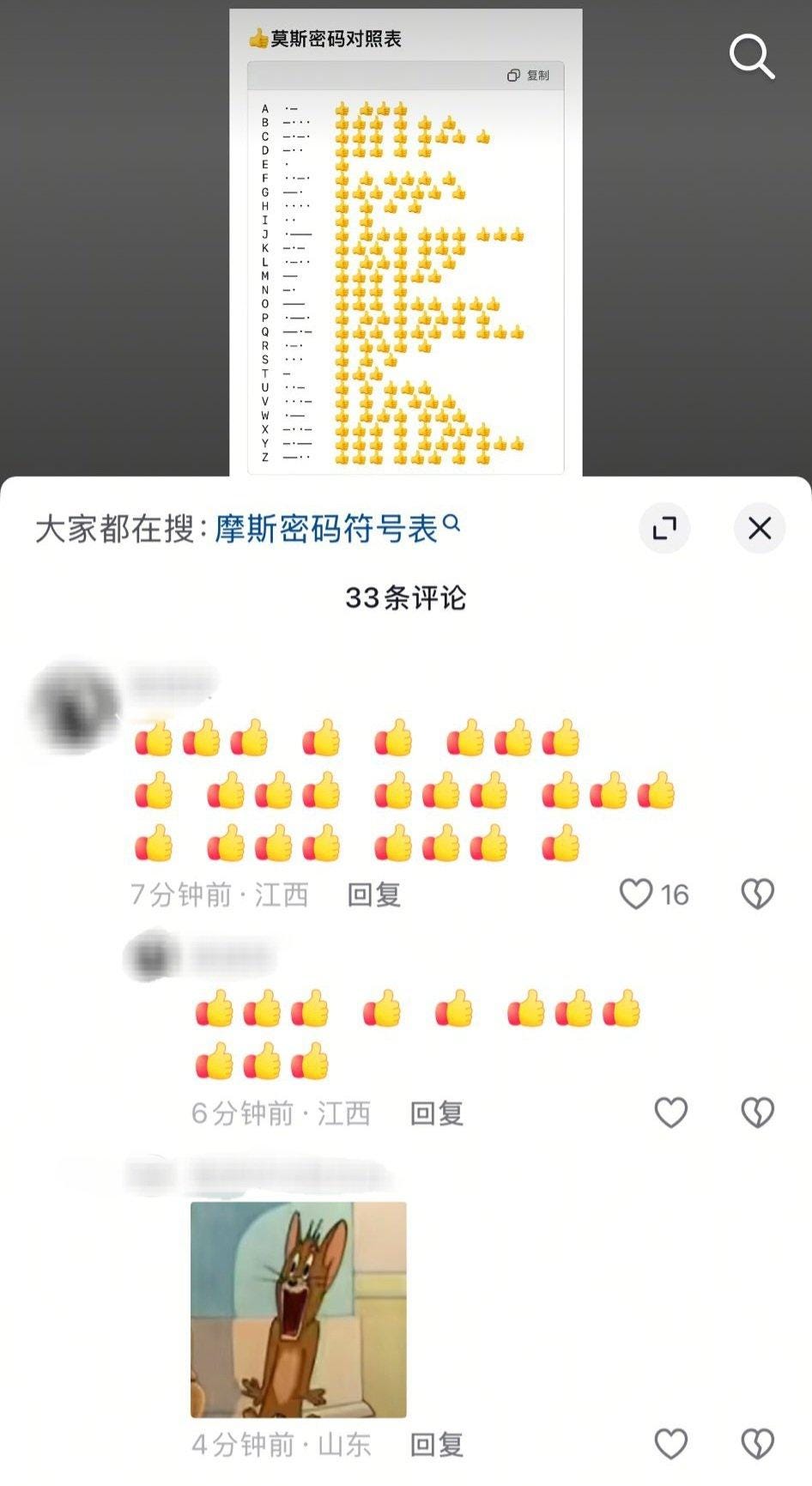
Positive emojis have also become a cover for more negative emotions. Netizens spam “Thumbs Up” (👍) and “Roses” (🌹), interspersing sharp critical text to evade AI censorship. Some even use thumbs up emojis (👍) to form messages using Morse code, which decode to the radical slogan: “XJP XT” (Xi Jinping Step Down).
2. The Collapse of State Credibility: Rejecting Propaganda
The military and state media have become targets for netizens’ ire. The regime’s military recruitment videos are overrun by cynicism, with top comments such as: “You don’t think of me when distributing benefits, but you remember me when there’s dirty work.” Some even used morphed or distorted text to express: “Let Xi Jinping block the bullets for me!” Meanwhile, netizens launched “verbal riots” against state media, denouncing them as mere tools of control.


3. Weaponizing the Law: The Constitution as a Shield
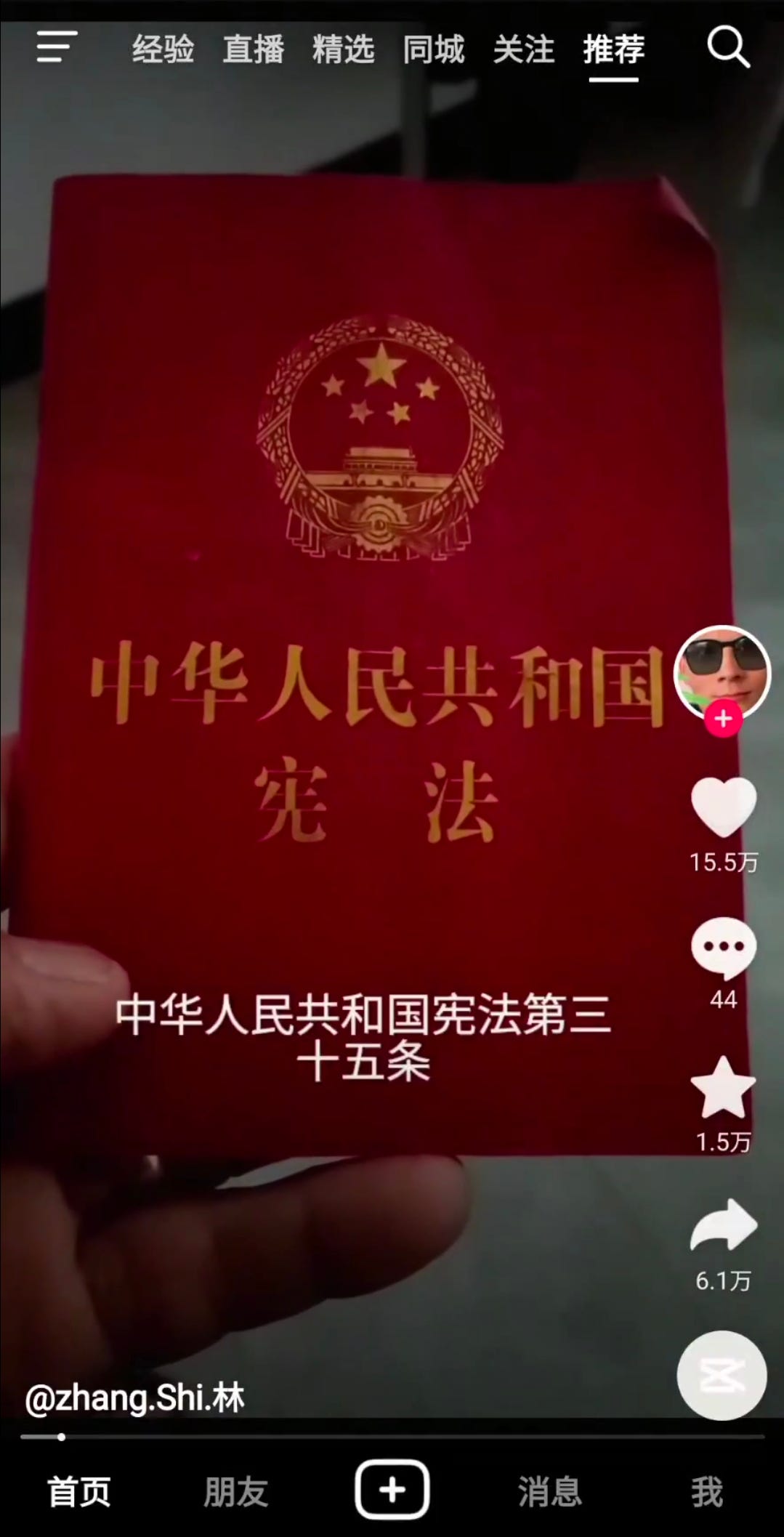
A video of citizens reading Article 35 of the Constitution, which guarantees freedom of speech, has gone viral, garnering over 150,000 likes. However, the irony is stark: while the video (the law) remains up, the comment section is strictly purged, leaving only a few dozen “approved” messages. This visual contradiction exposes the illegitimacy of the censorship.
4. The Resurrection of Forbidden Memory: A Legacy from “June 4th” to “A4”
The “Great Tower Rush” can be seen as a spiritual successor to the 1989 Tiananmen Protests and the 2022 White Paper Movement (the “A4 Revolution”). Despite total censorship, netizens are passing the torch. Images referencing the “Tank Man” and the iconic university student cycling to Tiananmen (declaring “It’s my duty”) are reawakening a sense of political responsibility.
Many comment sections have not only reproduced the “White Paper” symbol, but netizens are also taking immense risks to spread the protest slogans of Peng Lifa shouted at Sitong Bridge (such as “We want votes, not rulers”), and even the most radical slogan: “Xi Jinping Step Down.”
IV. Conclusion: The People Are No Longer Afraid
The “Great Tower Rush” of late 2025 is more than just a venting process for online anger; it is a stress test for the Chinese totalitarian governance model. It demonstrates that the social contract of “trading freedom for prosperity” has officially expired.2 More importantly, it shows that the CCP’s ideological monopoly has fractured. Censors may still be able to wipe the text from screens, but they can no longer suture the rift in the public consciousness. As these young Chinese netizens charge the “Tower” with the Constitution in one hand and the memory of 1989 in the other, they are sending a signal that should terrify dictators everywhere: The ice has broken, and the angry people are no longer afraid.
“大冲塔运动”:中国数字异议者的“自杀小队”式反攻
自2025年11月下旬以来,一场激烈的、去中心化的数字起义在中国严密的防火长城内爆发。这并非一场有组织的街头运动,而是一场舆论游击战。从抖音(中国版TikTok)的评论区到B站的弹幕,成千上万的中国网民正投身于这场被外界观察者称为“大冲塔运动”(#大冲塔运动)的抗争之中。透过 @墙国蛙蛤蛤 (GFWfrog) 和 @李老师不是你老师 (@whyyoutouzhele) 等推特(X)账号提供的观察窗口,外部世界目睹了惊心动魄的一幕:整整一代人在感到“一无所有”之后发出的集体咆哮。
一、“冲塔”:赛博时代的政治隐喻
要理解这场运动,首先必须理解这个术语。“冲塔”(Tower Rush)源自《英雄联盟》等MOBA类游戏,指玩家在无保护下直接冲击敌方防御塔,通常会导致角色瞬间死亡。 在2025年的中国互联网,“塔”象征着以习近平为核心的威权体制及其庞大的审查机器。去“冲塔”,意味着公开发布针对中共及其最高领导人的直接批评。网民们完全清楚后果:他们的帖子很可能会被删除,账号被封禁,甚至面临被警察找麻烦的现实风险。 然而,前赴后继,他们仍在发起冲击。这种“数字自杀小队”式的战术标志着一个心理转折点:恐惧已经让位于宣泄愤怒的渴望。
二、“回旋镖”效应:为何“小粉红”倒戈?
与以往不同,许多参与者是曾经的“小粉红”——那些年轻的民族主义者。他们的倒戈是“回旋镖效应”的结果——国家的激进宣传反噬了其自身的信徒。三大关键事件粉碎了他们的信仰:
1. “零容忍”神话的破灭(涉毒记录封存争议) 中共长期将“对毒品零容忍”作为不可逾越的红线。然而,当当局近期为了粉饰就业数据,试图松绑封存轻微涉毒人员的犯罪记录时,年轻忠诚者感到了深深的背叛:他们捍卫的“神圣原则”,不过是随时可抛弃的治理工具。
2. “逆向歧视”的刺痛(K字签证效应) 早前,为了提升对外开放国际形象并挽救经济,中国政府单方面设立了“外国青年科技人才签证”(官方简称“K字签证”)。面对“毕业即失业”的危机,年轻的理工科毕业生眼睁睁看着外国同龄人凭借该签证享受着他们眼中的“超国民待遇”。这唤起了一种历史性的怨恨——“量中华之物力,结与国之欢心”。这迫使年轻人开始质疑,中共是否真的如其口号所言在“为人民服务”。
3. “何不食肉糜”式的傲慢 央视发布视频将外卖员包装成“数字游民”,声称其“送外卖看风景”。对于数千万苦苦求生的灵活就业者,这种对苦难的浪漫化粉饰是终极侮辱,引爆了火药桶。
三、 抗争的艺术:解码异议
大冲塔运动是一场符号学的博弈。随着审查机器依赖AI,中国年轻人的创新能力打败了算法,并汇聚成了四股反抗浪潮:
1. 瞄准“皇帝”:从嘲讽到逼宫 运动最激进的前线是针对习近平13年任期及终身连任企图的直接冲击。
侮辱与隐喻: 网民使用“我兄弟”、“我儿子”等伦理梗隐喻习近平,或直接使用“猪头皇帝”、“野狗”等词汇,以及“狗走红毯”的病毒视频,彻底剥离了领袖的威严。
正能量emoji掩盖下的愤怒: 网民刷屏“点赞”👍和“玫瑰”🌹,在其中夹杂尖锐的批评文字,躲避AI审查;有网民甚至用👍组成摩斯密码,解码后却是激进的“XJP XT”(习近平下台)。
2. 国家信用的崩塌:拒绝宏大叙事
军队叙事翻车: 征兵视频评论区满是冷嘲热讽:“有好处的时候不想我,要干脏活的时候想起我了。”甚至有人用经过变形变音等处理的文字表示:“让习近平帮我挡子弹!”
怒怼喉舌: 网民在官媒评论区发起暴动,痛斥其已退化为“言论管控”工具。
3. 法律作为武器:宪法的反击 朗读《中华人民共和国宪法》第35条(保障言论自由)的视频疯传,这视频获得了超过十五万的点赞。然而,极具讽刺的是:虽然视频(法律)未被删,但评论区被严格控评,只剩下数十条经过筛选的留言。 这种视觉矛盾比任何口号都更有效地揭露了审查的非法性。
4. 禁忌记忆的复活:从“六四”到“A4”的传承 大冲塔运动可视为1989年六四民主运动和2022年白纸运动的精神延续。尽管审查极力抹除历史,薪火仍在传递:
六四的回响: 互联网上大量涌现隐喻“坦克人”的图像,以及当年那位骑自行车前往天安门高喊“It’s my duty”(这是我的责任)的大学生的形象,唤醒了一代人的政治责任感。
白纸与孤勇者: 评论区中不仅重现了白纸运动中“白纸”这一象征,网民更冒着极大风险传播运动中喊出的彭立发(Peng Lifa)四通桥抗议口号(如“不要领袖要选票”),乃至最激进的“习近平下台”口号。
四、 结语:人民已不再恐惧
2025年岁末的“大冲塔运动”是对中国极权治理模式的一次压力测试。 它表明,“以自由换取繁荣”的社会契约已正式失效。更重要的是,中共的意识形态垄断已经破裂。 审查员或许依然能擦去屏幕上的文字,但已无法缝合公众意识中的裂痕。当年轻的中国网民手持宪法、心中铭记着1989与四通桥的呼喊向“高塔”发起冲击时,他们向所有的独裁者发出了一个令其胆寒的信号: 坚冰已经打破,愤怒的人民已不再恐惧。
On Bilibili, a popular video sharing and livestreaming platform, user comments drift across the screen in a constant stream, not unlike a hail of “bullets.”
Beginning with the “common prosperity” policy initially implemented in the 1950s, the Chinese government attempted to create a de facto social contract with the Chinese people: under the control of the Chinese Communist Party, everyone would benefit economically, and so the people would be less motivated to push for civil rights or social change.
Go team go. 加油.